How To Test a Battery with a Multimeter? (Step-by-Step)
Whether you're maintaining a car battery, an RV, a solar energy system, or outdoor power equipment, battery problems are inevitable. Low charge, aging, and battery failure are among the most common issues users encounter. Fortunately, battery testing with multimeter is one of the easiest and most reliable ways to evaluate a battery's condition.
The key to accurate battery testing is measuring the resting (open-circuit) voltage. In this guide, you'll learn how to test a battery with a multimeter step by step, interpret voltage readings correctly, and evaluate battery health of both lead-acid and LiFePO4 batteries in various applications.
Why Battery Testing with a Multimeter Works?
A multimeter determines a battery's condition by measuring its resting (open-circuit) voltage. Once the battery has been disconnected from charging and loads for an appropriate amount of time, its voltage provides a reliable indication of whether it is fully charged, partially discharged, or nearly depleted.
Compared with specialized battery testers, a multimeter is inexpensive, widely available, and accurate enough for routine battery maintenance, making it ideal for beginners.
Battery Voltage Charts: Lead-Acid vs. LiFePO4
Although both the lead-acid battery and LiFePO4 battery may be labeled "12V," their voltage characteristics are very different. Always compare your reading with the correct voltage chart.
12V Lead-Acid Battery Voltage Chart
Lead-acid batteries are commonly used in cars, UPS systems, and backup power equipment. The voltage for 12V lead-acid batteries is standardized and widely accepted.
The table below shows the relationship between the resting voltage of a 12V lead-acid battery and its state of health.
| Battery Type | Fully Charged | Normal Operating Range | Low Charge | Deeply Discharged / Needs Attention |
|---|---|---|---|---|
| 12V Lead-Acid | 12.8–12.9V | 12.2–12.7V | 12.0–12.1V | Below 12.0V |
If a 12V lead-acid battery measures below 12.2V, recharge it as soon as possible. Leaving it in a deeply discharged state can cause sulfation, permanently reduce battery capacity and shorten its service life.
Note: The values above apply to standard automotive starting batteries. Deep-cycle lead-acid batteries used in RVs, golf carts, or solar systems can technically discharge to around 10.5–11.0V, but recharging before the voltage drops below 12.0V will significantly extend cycle life.
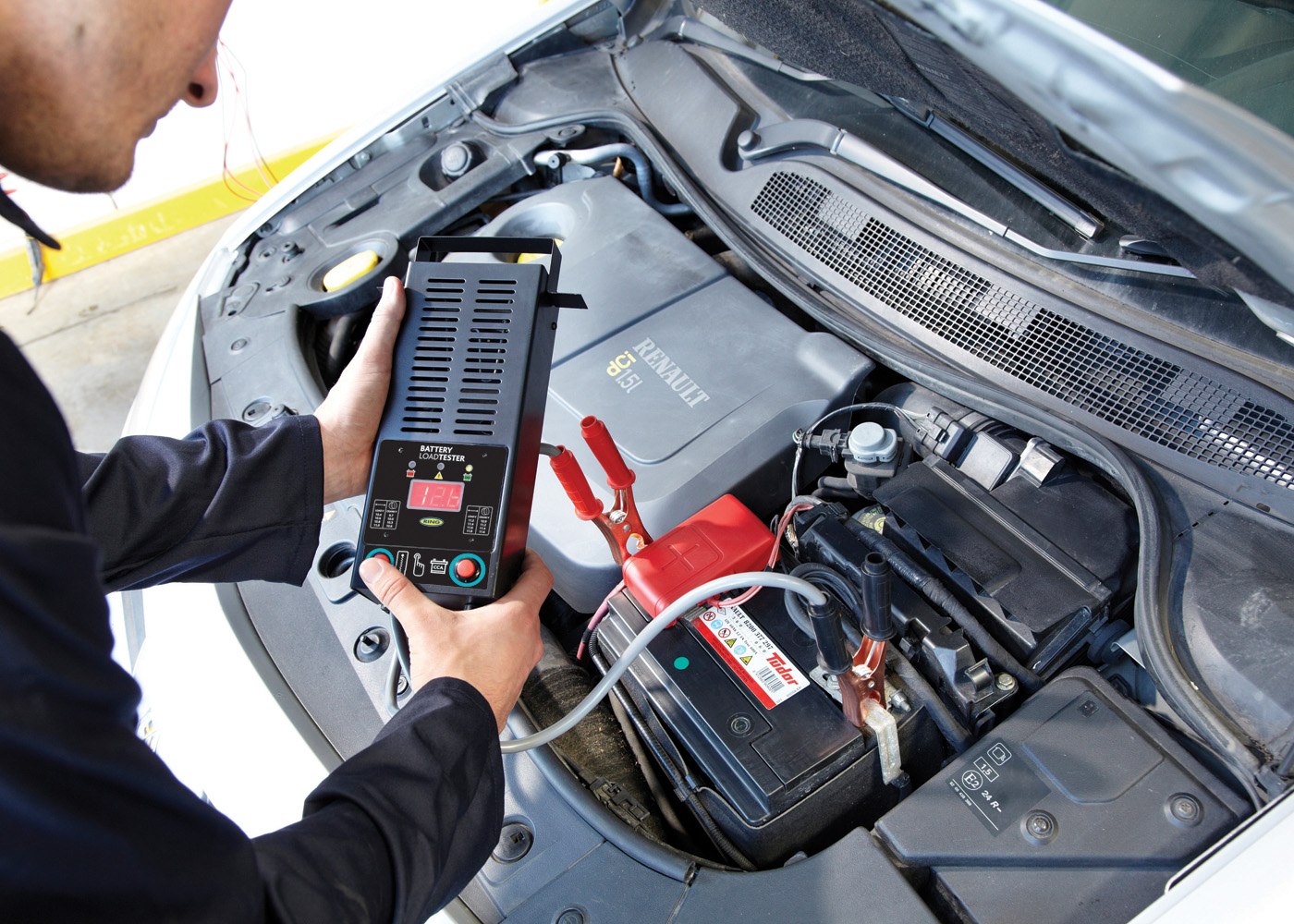
LiFePO4 Battery Voltage Chart
LiFePO4 batteries are widely used in RVs, marine applications, off-grid solar systems, electric vehicles, and portable power solutions. They cover a wide range of mainstream voltage configurations, including 12V, 24V, 36V, and 48V. They are also among the battery types that users are most likely to misjudge when testing.
Unlike lead-acid batteries, LiFePO4 batteries maintain a much flatter discharge curve, meaning voltage changes less dramatically during normal use. As a result, each battery voltage system has its own resting voltage standard.
| Battery Voltage | Fully Charged (Resting Voltage) | Recharge Recommended | Fully Discharged |
|---|---|---|---|
| 12V (12.8V) | ≥ 13.33V | 12.8–12.9V | ≤ 10.8V |
| 24V (25.6V) | ≥ 26.66V | 25.6–25.8V | ≤ 21.6V |
| 36V (38.4V) | ≥ 39.99V | 38.4–38.7V | ≤ 32.4V |
| 48V (51.2V) | ≥ 53.32V | 51.2–51.6V | ≤ 43.2V |
Tips: When the battery reaches the recharge recommended range, it's best to recharge it promptly to maximize battery lifespan.
Testing a Battery with a Multimeter (Step-by-Step)
Proper battery testing with multimeter only takes a few minutes and applies to both lead-acid and LiFePO4 batteries.
Step 1: Select the DC Voltage Setting
Turn the multimeter to DC Voltage (DCV).
Choose a voltage range slightly higher than your battery's rated voltage. For most 12V batteries, the 20V setting works perfectly. Auto-ranging meters only require selecting DC voltage mode.
Step 2: Connect the Probes
Touch the probes securely to the battery terminals:
- Red probe → Positive (+)
- Black probe → Negative (-)
Maintain steady contact throughout the measurement to avoid fluctuating readings caused by poor electrical contact.
Step 3: Read and Interpret the Voltage
Wait approximately 3–5 seconds until the reading stabilizes.
Record the voltage reading and compare it with the appropriate voltage chart above based on:
- Battery chemistry (Lead-Acid or LiFePO4)
- Battery voltage (12V, 24V, 36V, or 48V)
The following video demonstrates the complete testing process:
Upgrade to Bluetooth Lithium Batteries for Easier Battery Management
If you frequently use batteries in an RV, boat, off-grid solar system, or other outdoor applications, manually checking voltage with a multimeter can become time-consuming. You'll also need to compare readings against voltage charts every time you perform a test.
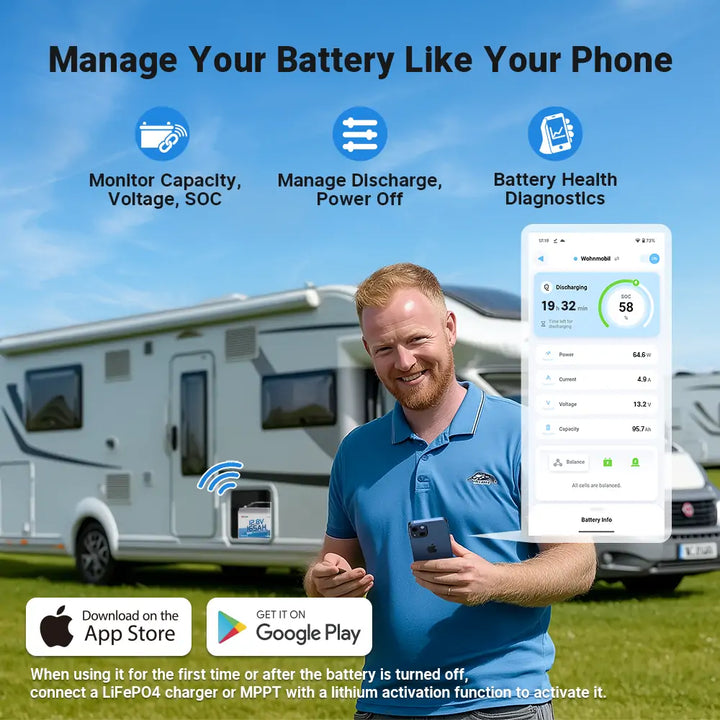
A smarter solution is to upgrade to Redodo Bluetooth lithium batteries, which let you monitor battery performance directly from your smartphone.
Key Features of Redodo Bluetooth Batteries:
- View battery voltage, current, State of Charge (SOC), power output, and remaining capacity in real time
- Monitor cell balancing status, Battery Management System (BMS) status, and overall battery health
- Remotely turn the battery on or off, and perform one-touch battery shutdown through the mobile app
Frequently Asked Questions
Why should I let the battery rest before testing?
A battery that has just been charged or discharged may display a temporarily elevated or depressed voltage, which doesn't accurately represent its true state of charge. For the most accurate results, allow the battery to rest before measuring: lead-acid battery for 1–2 hours; LiFePO4 battery at least 30 minutes. This ensures you're measuring the battery's true open-circuit voltage.
Why the voltage looks normal, but my battery doesn't last very long?
Voltage only indicates the battery's current electrical potential; it doesn't directly measure capacity. As batteries age, internal resistance increases and usable capacity decreases. A battery may show a normal resting voltage but experience significant voltage drop under load, resulting in shorter runtime and reduced performance.
Can I use the same voltage chart for both lead-acid and LiFePO4 batteries?
No. Lead-acid and LiFePO4 batteries have different electrochemical characteristics and different fully charged and discharged voltage ranges. Using the wrong voltage chart can lead to incorrect conclusions about the battery's condition.
What should a fully charged 12V battery read on a multimeter?
It depends on the battery chemistry. For a 12V lead-acid battery, the resting voltage when fully charged is 12.8V–12.9V. For a 12V LiFePO4 battery, the resting voltage when fully charged is 13.3V–13.4V. Always compare your reading with the correct battery type.
Conclusion
Learning how to test a battery with a multimeter is one of the simplest yet most effective maintenance skills for any battery owner. The key is to measure the resting open-circuit voltage and compare the result using the correct voltage standards for your battery chemistry.
Regular battery testing with multimeter can help you detect low charge levels early, prevent unexpected power failures, avoid irreversible battery damage, and extend battery service life.
For users who rely on batteries long-term or need to manage batteries frequently, upgrading to a Redodo Bluetooth LiFePO4 Battery offers even greater convenience. Instead of manually measuring voltage with a multimeter, you can view real-time voltage, current, SOC, and other key data directly from your phone. Upgrade now to enjoy maximum convenience!
Read More:

Redodo Technical Team
Redodo Technical Team
Join Redodo
Related Post

What is SOC in Lithium Battery and Why Does It Matter?

Best Portable Battery for Overlanding 2026: Buyer’s Guide

How to Live in an RV Full-Time: A Complete Beginner’s Guide

How To Test a Battery with a Multimeter? (Step-by-Step)

5 Best 48V Lithium Batteries for Golf Cart in 2026
Related Products

🔥【SAVE $30】Redodo 12V 120Ah Group 24 Trolling Motor Bluetooth Lithium Battery | For 3+ Days Fishing
🔥[Save $ 30] Redodo 12V 120Ah Group 24 Bluetooth Lithium Battery | For 1-2 Day RV Trips | Smallest 120Ah Battery


Redodo 24V 200Ah LiFePO4 Lithium Battery | Trolling Motor, Marine, RV, Solar Home, Home Backup

🔥Redodo 12V 320Ah Mini Bluetooth Battery LEAD-TO-LITHIUM Upgrade Kit | For 3-4 Days Boondocking