How to Store a Deep Cycle Marine Battery for Winter?
Proper winter storage is one of the most important steps in extending the life of your marine battery. Whether you use a boat for fishing, cruising, or water sports, cold temperatures and long periods of inactivity can significantly reduce battery performance if not handled correctly.
In this guide, we’ll walk you through practical tips for marine battery winter storage to keep your marine battery healthy and ready for spring.
Table of Content
Why Proper Winter Storage Matters for Marine Batteries
Deep cycle marine batteries are designed to deliver steady power over long periods. However, winter conditions, especially in freezing temperatures can cause:
- Temporary or permanent capacity loss
- Sulfation in lead-acid batteries
- Reduced lifespan
- Internal damage due to freezing electrolyte
- Slow self-discharge leading to deep discharge
Improper storage is one of the most common reasons marine batteries fail prematurely.
Whether you’re using a flooded lead-acid, AGM, or lithium (LiFePO4) deep cycle battery, winter storage plays a critical role in battery longevity.
Related Reading: Do Lithium Batteries Freeze in Cold Weather?
Should I Leave My Marine Battery on the Boat Over Winter?
In most cases, removing the marine battery from the boat and storing it indoors is the safest option for winter storage. This helps protect the battery from freezing temperatures, parasitic power drain, and long-term capacity loss.
However, if your battery is difficult to remove and your boat is stored in an area where temperatures remain above freezing, leaving the battery on board can be acceptable, as long as it is fully disconnected from all electrical systems.
Specifically, leaving your marine battery on the boat during winter is not recommended when in the following cases:
- Your boat is stored outdoors
- Temperatures often drop below freezing
- You are using a lead-acid or AGM battery and can’t be maintaining a trickle charge
When it’s okay to leave the marine battery installed:
- Your boat is stored indoors or in a climate-controlled environment
- The battery is lead-acid and is connected with a smart maintainer or trickle charger
- The battery is lithium with built-in protection and low self-discharge
- The battery is disconnected from all electronics
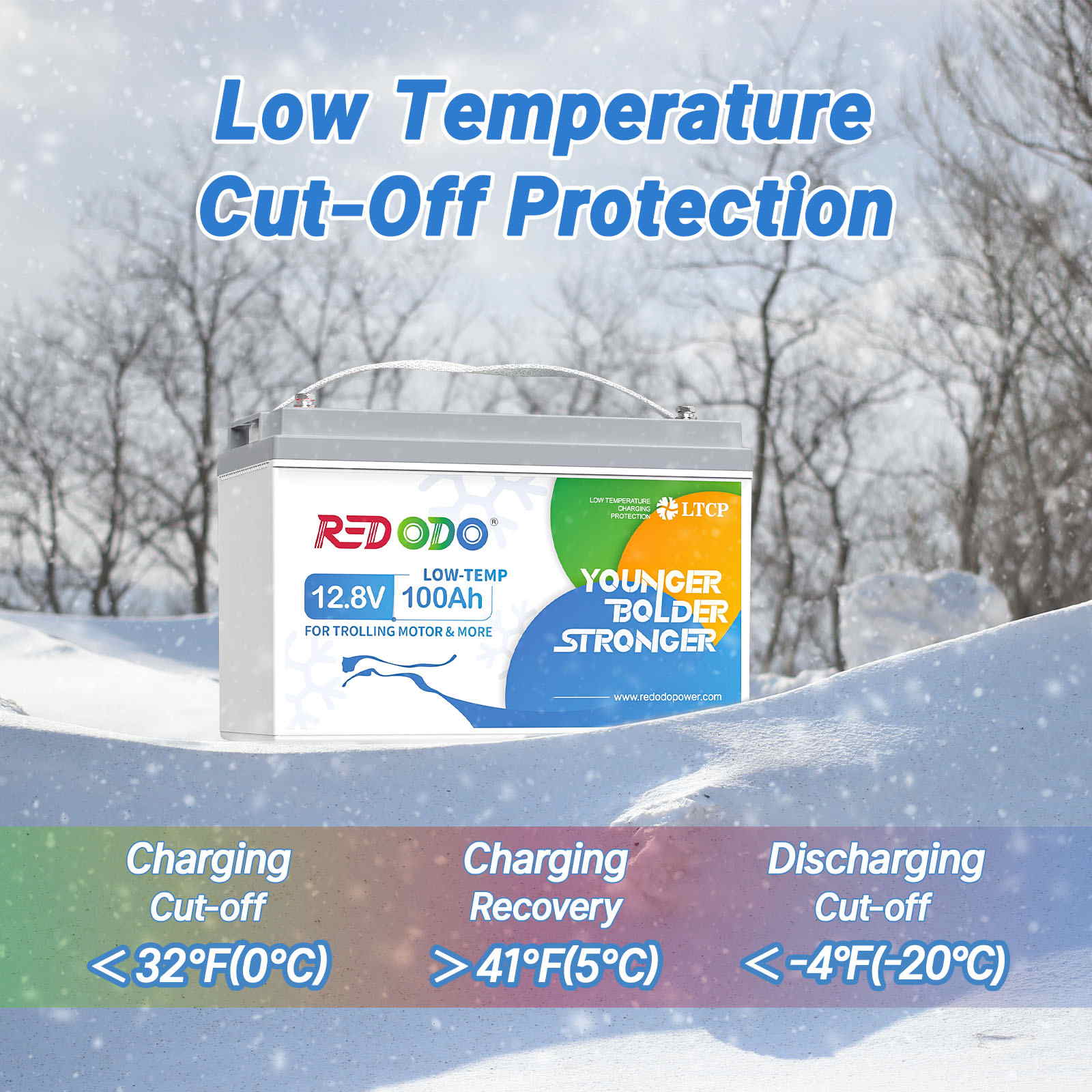
Redodo 12V 100Ah Lithium Trolling Motor Battery
Tips for Deep Cycle Marine Battery Winter Storage
1. Charge the Battery Before Storage
A battery left in a low-charge state is far more vulnerable to freezing and capacity loss. This is especially important for lead-acid batteries, which degrade quickly when stored partially discharged.
Best practice:
- Lead-acid batteries should be at 100% SOC
- Lithium batteries should be stored at 50–80% SOC
2. Disconnect and Remove the Battery
When the boat will not be used for an extended period, be sure to completely disconnect the marine battery. This helps eliminate the risk of parasitic drain from onboard electronics, such as bilge pumps or monitoring systems.
Remove the battery and place it indoors if temperatures may drop below freezing. If removal is difficult and your boat is stored in a temperature and humidity-controlled environment, disconnecting the battery cables is usually sufficient.
3. Clean and Inspect the Battery
Before putting the battery away for winter, take time to inspect and clean it. Dirt, moisture, or corrosion can lead to self-discharge and poor performance over time. Cleaning the terminals also helps ensure a good connection when reinstalling in spring.
4. Store in a Cool, Dry Location
The storage environment plays a major role in battery longevity. Extreme cold can damage internal components, while heat accelerates self-discharge and aging. A stable, dry indoor location is ideal for winter storage.
Recommended storage conditions:
- Ideal storage temperature in winter: 40–60°F (4–15°C)
- Low humidity
- Away from direct sunlight
- Not placed directly on concrete floors
5. Maintain the Battery During Winter
Even when stored correctly, batteries slowly lose charge over time. Periodic monitoring ensures voltage never drops to damaging levels.
Maintenance tips:
- Lead-acid batteries: check voltage every 4–6 weeks
- Lithium batteries: check every 2–3 months
- Recharge if voltage drops below safe levels
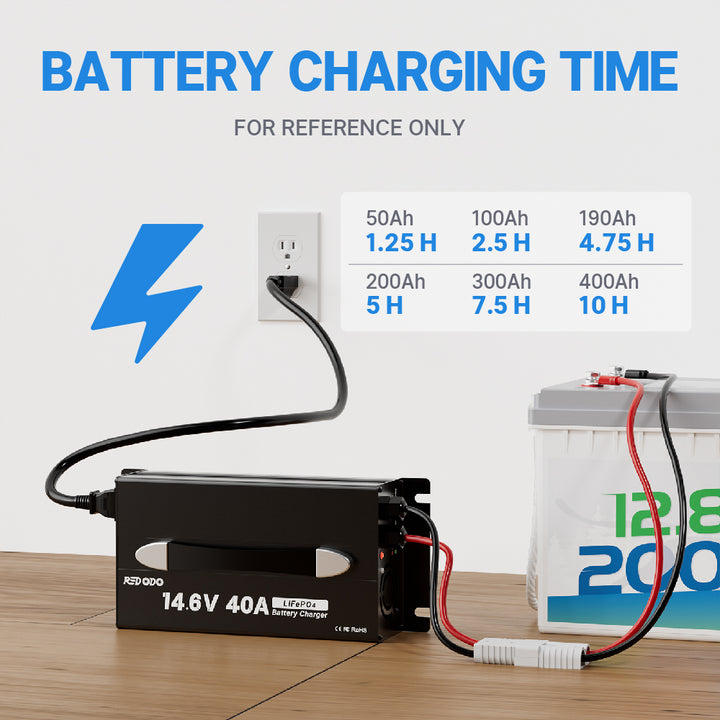
Redodo 14.6V 40A LiFePO4 Battery Charger
Common Mistakes When Storing a Marine Battery for Winter
1. Storing a Discharged Battery
In cold weather, a low-charge battery is also far more likely to freeze, which can cause irreversible internal damage. To prevent this, always charge your battery before winter storage. Lithium batteries should be stored at around 50–80% charge, while lead-acid batteries should be stored fully charged.
2. Leaving the Battery Connected All Winter
Leaving your marine battery connected to the boat during winter storage can slowly drain it, even if everything appears to be turned off. Many boats have small parasitic loads from devices such as bilge pumps, alarms, or onboard electronics that continue drawing power over time.
3. Storing the Battery in Freezing Temperatures
Cold temperatures are especially harmful to marine batteries, particularly lead-acid models. Even if no visible damage occurs, repeated exposure to freezing temperatures significantly reduces battery performance and lifespan.
For best results, store your battery in a dry, well-ventilated area where temperatures stay between 40°F and 60°F (4–15°C).
4. Using Improper Trickle Chargers (for Lead-acid)
Cheap or outdated trickle chargers may continuously supply power without regulating voltage, which can lead to overcharging, overheating, and long-term damage.
Always use a high-quality smart charger or maintainer with automatic shutoff, float mode, and compatibility with your battery type.
5. Not Check Battery Voltage During Storage
Many battery failures happen simply because the battery was forgotten over the winter. Even when disconnected, batteries slowly lose charge over time due to natural self-discharge.
As a general rule, lead-acid batteries should be checked every 4–6 weeks, while lithium batteries can be checked every 2–3 months.
Read More: LiFePO4 Lithium Battery Voltage Charts
FAQs About Marine Battery Winter Storage
What is the ideal storage temperature range for a marine battery?
The ideal storage temperature for a marine battery is between 40°F and 77°F (4°C to 25°C). This range helps minimize self-discharge and prevents internal damage caused by extreme cold or heat.
Should I fully charge my marine battery before winter storage?
For lead-acid batteries, always fully charge your marine battery before storing it for winter. A discharged or partially charged battery is more likely to sulfate, lose capacity, or freeze in cold conditions. For lithium batteries, it’s best to store them at 50–80% charge, which helps extend battery life.
How often should I check my battery during winter storage?
Regular monitoring helps prevent deep discharge. For lead-acid batteries, check the voltage every 4–6 weeks and recharge if necessary. For lithium batteries, checking every 2–3 months is usually sufficient due to their low self-discharge rate.
Conclusion
Knowing how to store a deep cycle marine battery for winter can save you hundreds of dollars and prevent frustrating springtime failures. By avoiding common mistakes and following proper winter storage practices, you can significantly extend your battery’s lifespan and ensure reliable performance when spring returns.
Read More:
A Comprehensive Guide on How to Store LiFePO4 Batteries

Redodo
Redodo
Join Redodo
Related Post

What is SOC in Lithium Battery and Why Does It Matter?

Best Portable Battery for Overlanding 2026: Buyer’s Guide

How to Live in an RV Full-Time: A Complete Beginner’s Guide

How To Test a Battery with a Multimeter? (Step-by-Step)

5 Best 48V Lithium Batteries for Golf Cart in 2026
Related Products


⚡【Flash Sale】Redodo 12V 100Ah Lithium Trolling Motor Battery With Low Temp Protection

⚡【Flash Sale】Redodo 12V 100Ah Group 24 Bluetooth LiFePO4 Battery | Real-Time Battery Monitoring | For RV, Marine, Solar

Redodo 12V 100Ah Group 31 Bluetooth Lithium Battery | Real-Time Battery Monitoring | For RV, Marine, Solar

⚡【Falsh Sale】Redodo 24V 50Ah Bluetooth Lithium Trolling Motor Battery | For 24V Trolling Motors with up to 100 lbs

⚡【Falsh Sale】Redodo 36V 50Ah Lithium Trolling Motor Battery for 36V Trolling Motors with 100-120 lbs

⚡【SAVE $35】Redodo 12V 100Ah 900 CCA Group 27 Dual Purpose Marine Battery with OTA Bluetooth Auto-Heating