Are Deep Cycle Batteries AGM or Lithium? A Complete Guide
When people mention a deep cycle battery, many immediately think of AGM or other lead-acid batteries, simply because they’ve been the standard choice for decades. But as deep cycle lithium batteries become more common in RV, marine, and off-grid systems, a normal question arises: are deep cycle batteries AGM or lithium?
In this guide we'll explain that what deep cycle really means, types of deep cycle batteries, and which are the better choice for modern energy needs.
Takeaways
A deep cycle battery describes how a battery is designed to deeply and repeatedly discharge/charge, it is not a specific battery chemistry. Deep cycle batteries can be lead-acid (including AGM or Gel) and lithium (LiFePO4).
While AGM/lead-acid deep cycle batteries are common, modern energy applications increasingly favor lithium deep cycle batteries due to their longer life, more usable capacity, lighter weight, and better long-term cost-effectiveness.
Table of Content
What Does Deep Cycle Battery Mean?
A deep cycle battery is defined by its purpose: it’s designed to regularly deliver steady power over long periods, rather than short bursts like a typical car starter battery. Deep cycle batteries are built to be regularly deeply discharged using most of their capacity, and historically this description applied mainly to lead-acid batteries.
The key technical aspect is that the internal structure (thicker plates, robust separators) enables deep discharge and recharge cycles without significant damage. It enables the battery to operate reliably over time and repeated use.
That is, this definition applies to any battery chemistry (lead-acid, AGM, or lithium), as long as it is engineered for repeated deep discharge.
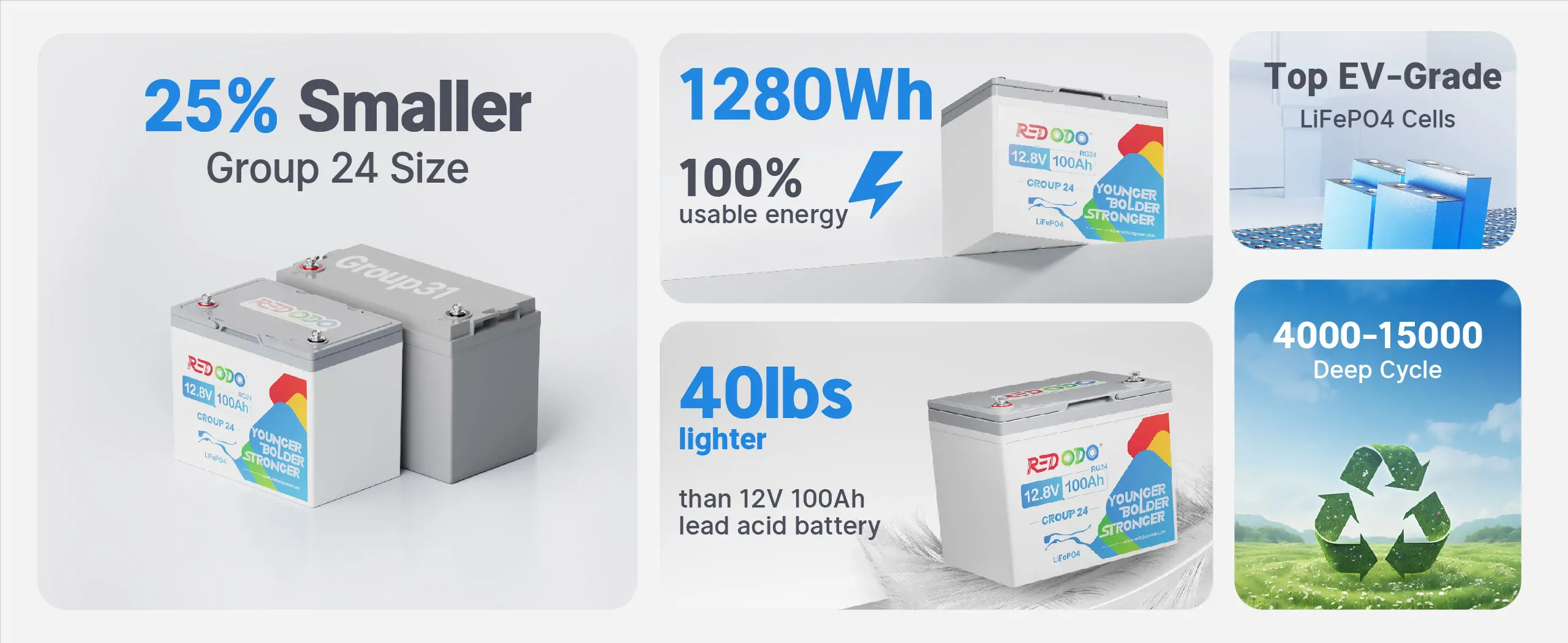
Redodo 12V 100Ah Group 24 Deep Cycle Battery
Are Deep Cycle Batteries AGM?
AGM batteries can be deep cycle batteries, but not all deep cycle batteries are AGM.
AGM (Absorbent Glass Mat) is a type of lead-acid battery, where the electrolyte is absorbed into fiberglass mats. Many AGM batteries are designed for deep cycle use, which is why the confusion exists.
However, deep cycle batteries also include flooded lead-acid deep cycle batteries, Gel batteries, and lithium LiFePO4 deep cycle batteries.
Types of Deep Cycle Batteries: Lead-Acid and Lithium
1. Lead-Acid Deep Cycle Batteries
These are the most traditional deep cycle batteries. They are built with thicker plates and dense active material so they can tolerate frequent discharge and recharge cycles without damage.
There are three common formats in this category:
- Flooded Lead-Acid: Traditional design, requires maintenance like watering and proper ventilation.
- AGM: Sealed lead-acid type, maintenance-free and spill-resistant.
- Gel: Electrolyte gelled to improve vibration and temperature resistance.
Lead-acid deep cycle batteries are affordable and reliable, but they have limitations, like heavier weight and shorter cycle life.
2. Lithium Deep Cycle Batteries
Lithium iron phosphate (LiFePO4) batteries are a type of lithium-ion batteries designed specifically for deep cycle use.
LiFePO4 lithium batteries didn’t become mainstream until the last decade, so older guides and forums often overlook them, even though they outperform AGM in most deep cycle applications likes RVs and solar systems.
Key advantages of lithium deep cycle batteries include:
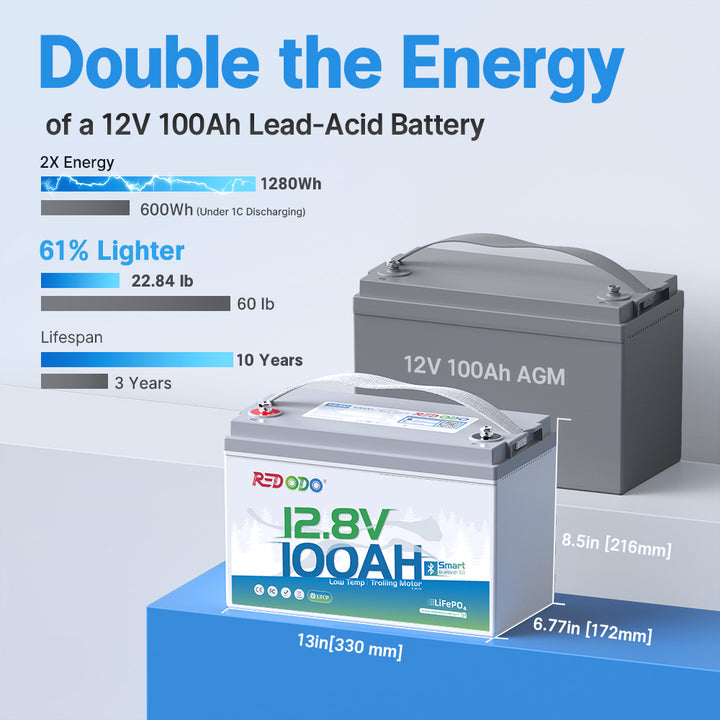
- Higher usable capacity: Often up to 80–100% of rated capacity, compared to ~50% for lead-acid.
- Longer cycle life: 3,000–5,000+ cycles, can last up to 10 years.
- Faster charging: Much quicker recharge times and less energy loss.
- Lighter and more compact: 50–70% lighter than equivalent lead-acids.
- Maintenance-free: Built-in Battery Management Systems (BMS) protect the battery.
Related Reading: AGM vs. Lithium Batteries: Which Is Better?
What Is the Best Deep Cycle Battery?
when comparing different deep cycle battery options, lithium deep cycle batteries, specifically LiFePO4, stand out as the best overall choice for most users today.
Traditionally, flooded lead-acid (FLA) and AGM batteries were considered the go-to deep cycle solutions for RVs, boats, and off-grid systems. They are proven technologies and still work well for light or occasional use.
However, their limitations become clear in large-capacity demand or real-world scenarios: only about 50% of their rated capacity is safely usable; frequent deep discharges shorten their lifespan; and their heavy weight makes installation and transport less convenient.
Lithium deep cycle batteries solve many of these issues. Because they are designed to handle 80–100% depth of discharge without damage, users can access far more usable energy from the same amp-hour rating.
In addition, lithium batteries maintain a stable voltage throughout the discharge cycle, which is especially important for sensitive electronics, inverters, and modern appliances.
From a long-term perspective, this makes lithium the best deep cycle battery choice for users who rely on daily cycling or high-efficiency energy systems. While the upfront cost is higher, the cost per cycle and total cost of ownership are significantly lower than AGM or flooded lead-acid batteries.
Explore Redodo best lithium batteries, built with EV-grade LiFePO4 cells and capable of 100% depth of discharge with 4,000+ cycles.
Are Marine Batteries Deep Cycle?
Some are, but not all. Marine batteries are generally classified into three types based on how they are used: deep cycle marine batteries, marine starting batteries, and dual-purpose marine batteries.
- Deep Cycle Marine Batteries: are designed to supply steady, long-lasting power and to handle repeated deep discharges. They are commonly used for trolling motors, onboard electronics, lighting, and other accessories that run continuously while on the water.
- Marine Starting Batteries: are built to deliver a high burst of power for a short time in order to start the engine.
- Dual-Purpose Marine Batteries: combine elements of both starting and deep cycle designs. They offer added convenience for smaller boats with limited power needs.
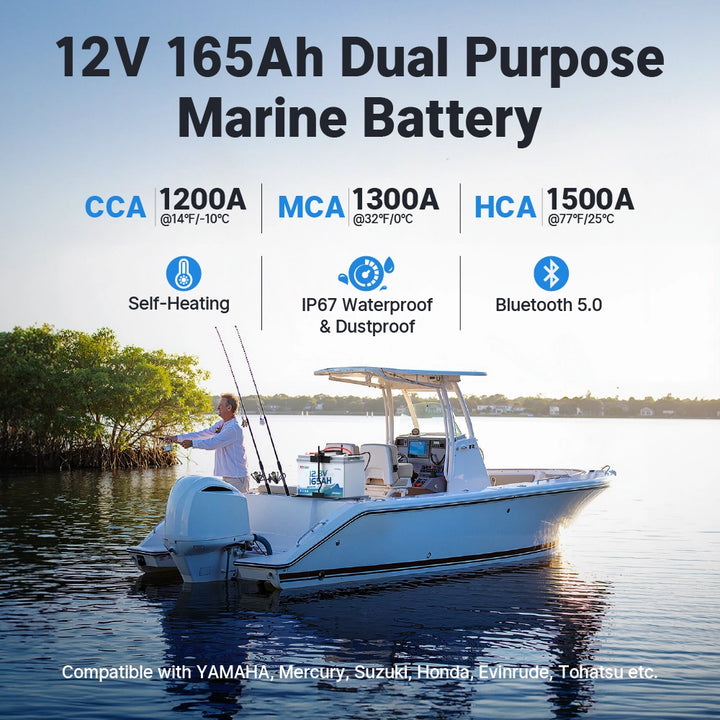
Redodo 12V 165Ah Lithium Dual-Purpose Marine Battery
How Many Amp-Hour Is a Deep Cycle Battery?
There is not a single Amp-Hour (Ah) value that defines a deep cycle battery. Instead, deep cycle batteries come in a range of capacities depending on application needs, from portable units around 50Ah to large systems exceeding 300Ah or higher.
However, what matters more than the nominal Ah rating is usable capacity. For example:
- A 100Ah lead-acid deep cycle battery might only safely deliver ~50Ah before needing recharge.
- A 100Ah LiFePO4 battery can often provide up to 100Ah usable power.
Deep Cycle Batteries vs. Starter Batteries
Understanding the difference between deep cycle and starter batteries also helps clarify deep cycle capability.
Starter batteries are designed to deliver a high current in short bursts (e.g., starting an engine), and then are quickly recharged. Internally, starter batteries use many thin plates to maximize surface area, allowing them to release a large amount of power quickly. However, this design makes them poorly suited for deep discharges, which can shorten their lifespan.
Deep cycle batteries are engineered to provide steady power over long periods and tolerate deep discharge cycles. They use thicker plates and more robust internal structures, allowing them to be discharged deeply and recharged repeatedly without significant damage.
Related Reading: Deep Cycle Batteries vs. Starting Batteries
Conclusion
Deep cycle batteries are characterized by their ability to provide sustained power and tolerate deep discharge cycles, not by chemistry. While many deep cycle batteries on the market are AGM or lead-acid, the term itself is broader and includes lithium options.
As modern energy systems demand more efficiency, reliability, and long-term performance, lithium deep cycle batteries are rapidly becoming the best choice for most heavy-use applications.
Read More:
Group 24 vs. Group 31 Deep Cycle Batteries
What's the Difference Between a Deep Cycle Marine and RV Battery?

Redodo
Redodo
Join Redodo
Related Post

What Are Street Legal Requirements for Golf Carts?

What is SOC in Lithium Battery and Why Does It Matter?

Best Portable Battery for Overlanding 2026: Buyer’s Guide

How to Live in an RV Full-Time: A Complete Beginner’s Guide

How To Test a Battery with a Multimeter? (Step-by-Step)
Related Products

🎃【SAVE $40】Redodo 12V 165Ah 1200 CCA Group 31 Dual-Purpose Lithium Marine Battery | Starting • Trolling • Electronics— All from One

🔥【SAVE $45】Redodo 12V 165Ah Group 31 Bluetooth Lithium Battery | For RV, Marine, Solar Home

🎃【SAVE $30】Redodo 12V 320Ah Mini Bluetooth Lithium Battery | Best for Boondocking, Long Road Trip, Desert Trip, Home Backup

【Pre-Order】Redodo 12V 300Ah Lithium LiFePO4 Battery | Replaces 6*12V 100Ah AGM Batteries | For RV, Marine, Home battery backup


Redodo 12V 100Ah Group 24 Bluetooth LiFePO4 Battery | Real-Time Battery Monitoring | For RV, Marine, Solar

🔥【SAVE $40】Redodo 12V 100Ah 900 CCA Group 27 Dual Purpose Marine Battery with OTA Bluetooth Auto-Heating

🔥【SAVE $29】Redodo 12V 100Ah Group 31 Bluetooth Lithium Battery | Real-Time Battery Monitoring | For RV, Marine, Solar