Portable Power Station vs. Deep Cycle Battery: Which is Better?
When looking for backup power, camping electricity, or off-grid energy solutions, you may quickly discover two primary options: portable power stations and deep cycle batteries. However, many users encounter the same question: should I choose a portable power station or a deep cycle battery setup?
In this guide, we compare portable power station and deep cycle battery systems, explain their similarities and differences, and help you determine which option makes more sense for your situation.
Portable Power Station vs Deep Cycle Battery: Quick Comparison
| Factor | Portable Power Station | Deep Cycle Battery System |
|---|---|---|
| Setup Complexity | ✅Plug-and-play, minimal setup | Requires additional components and setup |
| Expandability | Usually limited or brand-dependent | ✅Highly scalable and customizable |
| Cost Efficiency | Higher cost per Wh | ✅Better value and lower cost per Wh |
| Portability | ✅Compact all-in-one design | Depends on battery size and system design |
| Repairability | Entire unit may require replacement | ✅Individual components can be upgraded or replaced |
| Best For | Casual users, camping, emergency backup | RVs, solar off-grid systems, boats, long-term power needs |
Table of Content
What Is a Portable Power Station?
A portable power station is an all-in-one energy storage system that combines batteries, an inverter, charging inputs, battery management systems (BMS), and output ports into one package.
Most portable power stations allow users to plug devices directly into AC outlets, USB ports, or DC outputs without additional setup. Because everything is integrated, they are often marketed as plug-and-play solutions for camping, emergency backup, and mobile power needs.
Portable power stations are popular among beginners because they require little technical knowledge. You charge them, turn them on, and use them.
What Is a Deep Cycle Battery?
A deep cycle battery is designed to provide steady power over long periods and withstand repeated charging and discharging cycles.
Deep cycle batteries come in two main types: traditional lead-acid batteries and modern LiFePO4 batteries. Due to the lighter weight, longer lifespan, and higher usable capacity, LiFePO4 batteries have become increasingly popular.
These batteries are commonly used in RVs, boats, off-grid solar systems, golf carts, and backup power installations because they offer flexibility and scalability. Users can pair them with components such as inverters, solar controllers, or monitoring systems to build solutions tailored to their exact power needs.
Related Reading: Are Deep Cycle Batteries AGM or Lithium?
Portable Power Station vs Deep Cycle Battery: Key Differences
Both the two solutions provide portable electricity, but they work differently and are designed for different users. Understanding the differences can help you avoid overspending or buying equipment that does not match your needs.
Setup Complexity
Portable power stations are designed for convenience. Most users simply charge the unit and plug devices into it immediately.
Deep cycle battery systems require more planning because users often need to select compatible chargers, inverters, wiring, and protection devices. Beginners may initially find this intimidating.
If simplicity is your top priority, portable power stations usually win.
Expandability and Flexibility
Portable power stations are convenient, but many models have limitations when users want more capacity. Adding more runtime of a power station often means purchasing expensive expansion batteries or replacing the entire unit.
Deep cycle battery systems offer much greater flexibility. Users can increase storage capacity, upgrade inverters, add solar charging, or customize their system over time.
For users who expect their power needs to grow, deep cycle batteries often provide better long-term flexibility.
Cost and Value
The comparison of portable power station vs battery and inverter systems often comes down to cost. Portable power stations bundle everything together, which increases convenience but also increases pricing.
A deep cycle battery system may require more components initially, but users can often achieve more usable energy capacity at a lower cost per watt-hour, especially larger systems generally favor battery-based setups.
Portability and Convenience
For occasional camping trips or emergency use, portable power stations are usually easier to transport.
Portable power stations are designed specifically for mobility. They often include carrying handles, built-in displays, integrated charging systems, and multiple output ports in a compact enclosure.
Deep cycle battery systems can become heavier and more complicated once additional components are added.
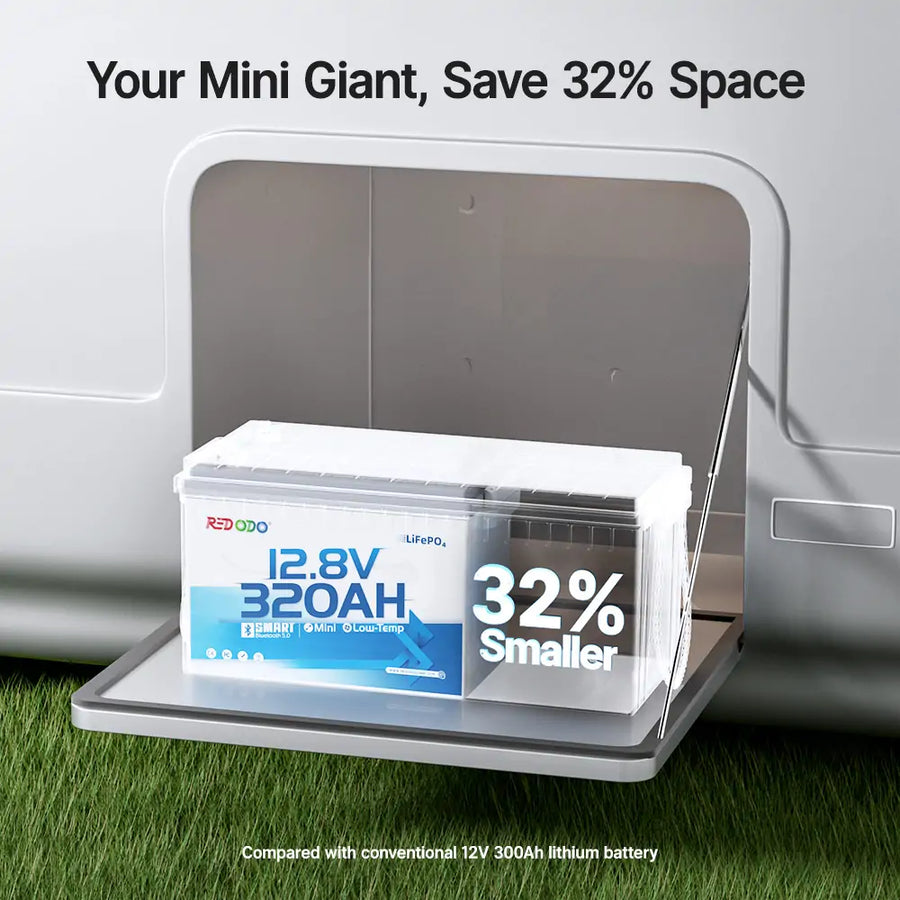
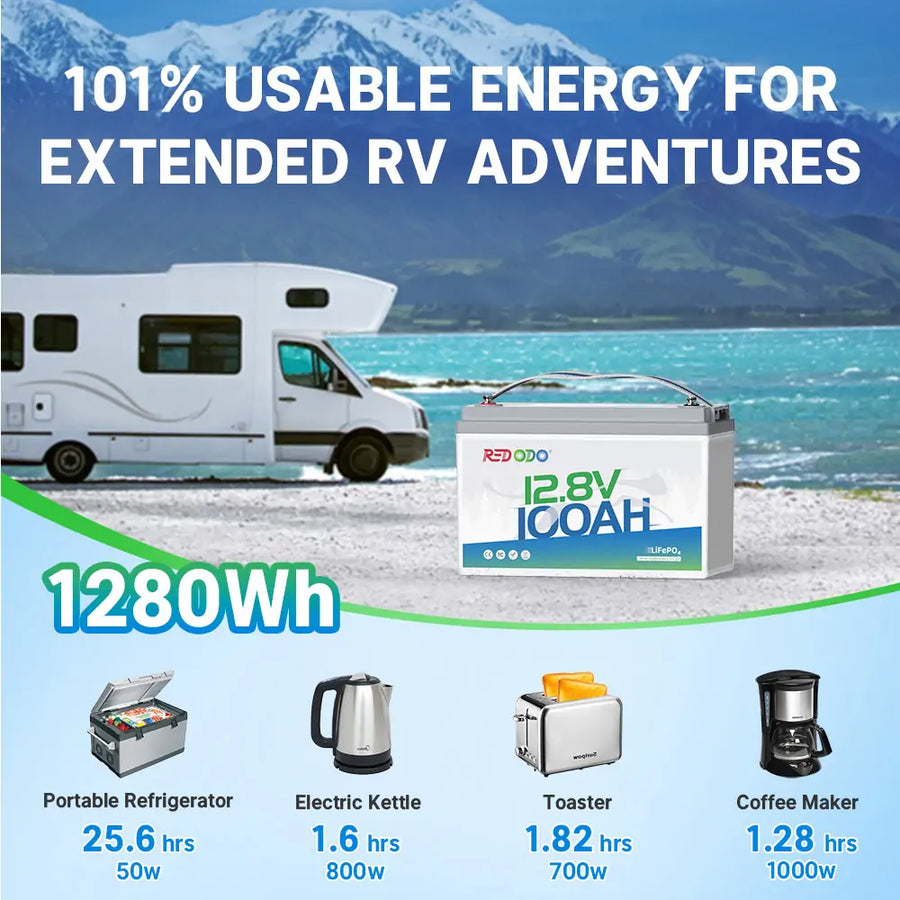
However, modern lithium deep cycle batteries have become much more portable than many users expect. Some Mini lithium batteries designed to reduce weight and save installation space while maintaining high energy capacity, for example, the Redodo 12V 100Ah Mini Bluetooth Battery and the 12V 320Ah Mini Bluetooth Battery.
Repairability and Lifespan
Portable power stations combine many components into one enclosure. While this simplifies operation, it also means that if one major component fails, repairs may become difficult or expensive.
Deep cycle battery systems use separate components, making upgrades or replacements easier. Users can replace an inverter without replacing batteries or upgrade batteries without changing the entire system.
This modular design often appeals to users focused on long-term ownership.
Which One Is Better for Different Applications?
For Short Camping Trips
Portable power stations are often the easiest choice for casual users. If your goal is charging phones, powering lights, running small appliances, or supporting short trips, an all-in-one solution minimizes setup and reduces complexity.
For RVs and Off-Grid Systems
Deep cycle batteries usually provide greater advantages for RV owners or users building larger energy systems. These systems require higher capacity, longer runtime, solar integration, and easier expansion—all areas where deep cycle battery systems excel.
For Home Backup Power
Both solutions work well for backup applications. Portable power stations are excellent for simple home backup because they require little installation. Deep cycle battery systems provide longer runtime and higher output for users needing to power larger loads or entire backup systems.
Should You Choose Lithium Deep Cycle Batteries?
If you decide to build a battery system, lithium deep cycle batteries have become increasingly popular because they provide longer cycle life, lighter weight, faster charging, and more usable capacity compared with traditional lead-acid batteries.
For users building scalable power systems, lithium batteries often reduce maintenance while improving overall performance. Redodo lithium deep cycle batteries, for example, are built with high-quality LiFePO4 cells and advanced BMS technology, offering reliable performance across a wide range of capacities.
The versatility makes them suitable for diverse applications, from RV solar and marine setups to trolling motors and off-grid energy systems, allowing users to tailor their power solutions to their specific needs.
However, the best choice still depends on your budget, power requirements, and technical comfort level.
FAQs
Can I use a deep cycle battery instead of a portable power station?
Yes, but additional equipment like an inverter and a battery charger are usually required. A battery alone typically cannot provide household AC power without an inverter and supporting components.
Are portable power stations more expensive?
Usually yes when comparing usable capacity. The extra cost comes from the convenience of having everything integrated into one device.
Which lasts longer: portable power station or deep cycle battery?
The battery chemistry matters more than the product category itself. Both types of products are widely built with LiFePO4 cells; modern lithium systems in both categories can provide thousands of charge cycles when used properly.
Is a battery and inverter better than a portable power station?
For large systems, expandable setups, and long-term customization, battery-and-inverter systems often provide more flexibility. For convenience and simplicity, portable power stations are usually easier.
Conclusion
Portable power stations offer simplicity, convenience, and fast setup, making them ideal for beginners and casual users. Deep cycle battery systems provide flexibility, dependability, and often better long-term value, especially for RV owners, off-grid users, and people with growing energy needs. The right choice is usually the one that fits your needs today while leaving room for tomorrow.
Read More:
Can I Use a LiFePO4 Battery to Power or Extend a Portable Power Station?
What's the Difference Between a Deep Cycle Marine and RV Battery?

Redodo
Redodo
Join Redodo
Related Post

What Battery to Run a Fish Finder and Livewell All Day?

A Full Guide of Wiring Solar Panels in Series vs Parallel

How to Install Solar Panels on an RV or Motorhome? Step-by-Step Guide

Best Prime Day LiFePO4 Battery Deals on RV, Boat, Solar & Golf Power

Big Prime Day Battery Deals 2026: Save 58% on Redodo LiFePO4 Batteries
Related Products

🔥【Prime Big Deal】Redodo 12V 100Ah Group 31 Bluetooth Lithium Battery | Real-Time Battery Monitoring | For RV, Marine, Solar

Redodo 12V 100Ah Group 24 Bluetooth LiFePO4 Battery | Real-Time Battery Monitoring | For RV, Marine, Solar

🔥【Prime Big Deal】Redodo 12V 100Ah Group 24 Deep Cycle LiFePO4 Lithium Battery | For Home, RV, Marine

🔥【Prime Big Deal】Redodo 12V 100Ah Self-Heating Lithium Battery | For RV, Boats, and Solar Home Systems

🔥【Prime Big Deal】Redodo 12V 100Ah LiFePO4 Lithium Battery | Best Budget | For RV, Solar, Trolling Motor

🔥【Prime Big Deal】Redodo 12V 165Ah Group 31 Bluetooth Lithium Battery | For RV, Marine, Solar Home

🔥【Prime Big Deal】Redodo 12V 300Ah Lithium LiFePO4 Battery | Replaces 6*12V 100Ah AGM Batteries | For RV, Marine, Home battery backup

🔥【Prime Big Deal】Redodo 12V 100Ah Ultra-Mini Lithium LiFePO4 Battery | Smallest Bluetooth Battery | For RV, Trolling Motor, Solar

🔥【Prime Big Deal】Redodo 12V 320Ah Mini Bluetooth Lithium Battery | Best for Boondocking, Long Road Trip, Desert Trip, Home Backup