Choosing The Best Lithium Batteries for Bass Boat
Bass boats rely heavily on electrical power. From starting the outboard engine and running trolling motors to powering fish finders, having the right battery setup directly affects your performance on the water.
But how to choose the best batteries for bass boats? It‘s about finding the right balance between voltage, runtime, weight, reliability, and long-term value.
In this guide, we'll explore how to choose the right battery setup for your bass boat, including key factors such as battery voltage, capacity, runtime, and battery types. We'll also recommend several lithium battery options for starting systems, trolling motors, and electronics to help you build a reliable power system for your fishing adventures.
Table of Content
- What Is a Bass Boat?
- What Type of Battery is Best for Bass Boats?
- Choose the Right Battery Voltage for Your Bass Boat System
- Consider Weight and Space Limitations
- Match Battery Type to Its Application
- How Many Batteries Should I Need for My Bass Boat?
- Best Lithium Battery Recommendations for Bass Boats
- FAQs about Battery for Bass Boats
- Conclusion
What Is a Bass Boat?
A bass boat is a specialized fishing boat designed specifically for freshwater fishing, particularly bass fishing in lakes, rivers, and reservoirs.
Unlike larger offshore boats or general-purpose recreational boats, bass boats prioritize speed, shallow-water maneuverability, and efficient movement between fishing spots. Their sleek, low-profile design allows anglers to cover water quickly while maintaining excellent stability when casting or fighting fish.
Since bass boats rely heavily on electrical systems, choosing the right battery setup is essential for maintaining reliable performance on the water.

What Type of Battery is Best for Bass Boats?
Offering stable power delivery, greater usable energy, and substantial weight savings, lithium batteries are widely considered the best battery choices for bass boats.
Traditional flooded and AGM lead-acid batteries have powered bass boats for decades, but modern fishing setups place much higher electrical demands on batteries than ever before. Large fish finders, forward-facing sonar, high-thrust trolling motors, and longer fishing sessions require more energy while adding more weight.
Lithium marine batteries solve many of these limitations. Compared to lead-acid batteries, lithium LiFePO4 batteries provide significantly more usable capacity, maintain stable voltage during discharge, recharge faster, and weigh substantially less. A lighter battery system can also improve boat performance by reducing overall weight and improving efficiency.
Learn more from the full guide: Best Marine Battery Type, Size, and Buying Guide
Choose the Right Battery Voltage for Your Bass Boat System
Voltage is one of the most important considerations because different systems on your bass boat require different battery configurations.
Most starting systems and electronics operate on 12V power systems. If you're looking for the best starting battery for bass boat applications, a 12V battery is typically the standard choice.
Trolling motors, however, often require higher voltages depending on thrust requirements:
- Smaller trolling motors commonly use 12V systems
- Mid-size trolling motors frequently require 24V systems
- Larger high-thrust trolling motors often operate on 36V systems
Most bass boats use a 12V system for starting batteries and electronics, while trolling motors commonly operate on 24V or 36V systems depending on boat size, thrust requirements, and fishing style. Today, many modern fiberglass bass boats increasingly favor 36V setups for maximum thrust, runtime, and efficiency.
| System | Typical Use | Typical Thrust Range | Common on Bass Boats? |
|---|---|---|---|
| 12V |
Starting battery & electronics Small boat trolling motors |
30–55 lbs thrust | Almost universal |
| 24V | Mid-size trolling motors | 70–80 lbs thrust | Very common |
| 36V | High-power trolling motors | 100–115 lbs thrust | Increasingly common |
Choose the Right Battery Capacity (Ah) for Bass Boats
When choosing batteries for a bass boat, one of the most important factors to consider is battery capacity, especially for trolling motor batteries. Battery capacity determines how long your equipment can operate before recharging becomes necessary.
For electronics-only applications, capacities around 50Ah–75Ah may provide sufficient runtime depending on usage. Trolling motors typically require significantly larger capacities because they draw power continuously during operation.
If you frequently fish full-day trips or tournaments, larger battery capacities help reduce charging frequency and provide additional reserve capacity.
You should also take your fishing environment into account. For example, if you typically fish in calm waters such as small ponds with slow currents and minimal vegetation, a smaller capacity battery may be sufficient for your needs.
On the other hand, if you often fish in large bodies of water with strong winds, heavier currents, and dense vegetation, a higher-capacity option like a 100Ah battery is generally a better choice, as it provides longer runtime and more reliable performance under demanding conditions.
Related Reading: What Size Battery for Trolling Motor?
Consider Weight and Space Limitations
One major advantage of lithium batteries for bass boats is weight reduction.
Replacing lead-acid batteries with lithium batteries can remove dozens or even hundreds of pounds from your bass boat depending on your setup. Less weight can improve acceleration, handling, fuel efficiency, and overall performance.
However, battery dimensions still matter. Before purchasing a battery, make sure that it will properly fit into your boat’s battery compartment or battery box.
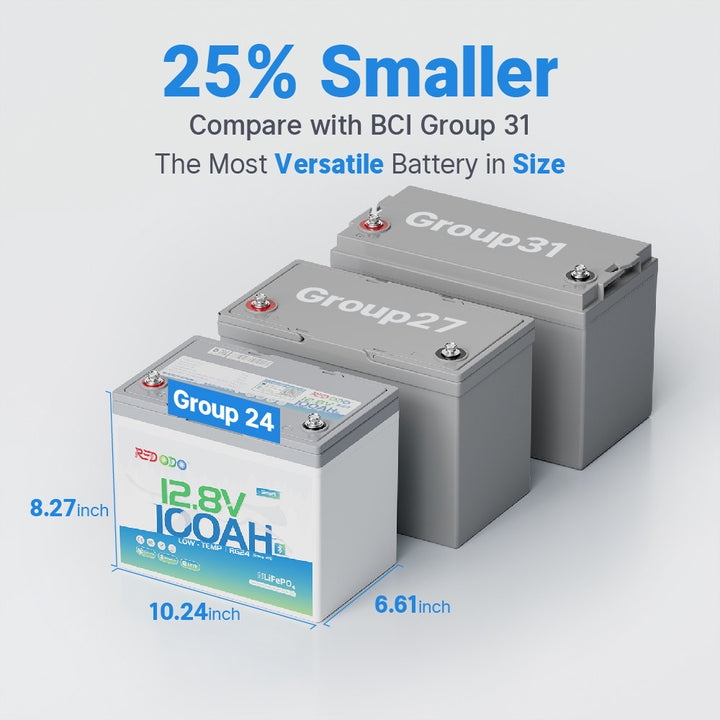
Bass boats often use standardized battery case sizes such as Group 24 or Group 31, and selecting the correct group size ensures a secure fit, safe installation, and proper cable management without unnecessary modifications. Always verify available compartment space before selecting larger capacities.
Match Battery Type to Its Application
Bass boats typically use three battery categories:
- Starting batteries for engine ignition
- Deep cycle batteries for trolling motors
- Dedicated batteries for electronics and accessories (for example, fish finder batteries)
Deep cycle lithium batteries are generally preferred for trolling motor applications because they are designed for repeated discharge cycles. Avoid using a starting battery to power your trolling motor and other electronics.
Related Reading: Deep Cycle Batteries VS Starting Batteries
How Many Batteries Should I Need for My Bass Boat?
The number of batteries depends largely on your setup. For example, a simple bass boat may operate with a starting battery and one trolling motor battery. Larger tournament boats frequently use separate batteries for starting, trolling motors, and electronics.
Many advanced setups use four to six batteries depending on trolling motor voltage and accessory loads.
On the other hand, if your boat uses a 24V or 36V system, you may need to connect multiple 12V batteries in series to achieve the required voltage.
A 24V system typically requires two 12V batteries connected in series to operate properly. Similarly, a 36V trolling motor setup requires three 12V batteries connected in series to create a complete 36V power system. Learn how to connect batteries in series in this blog.
If you want to simplify installation and reduce the complexity of series wiring, investing in a dedicated 24V lithium battery or 36V lithium battery can be a smart solution.
For bass boat owners who prioritize convenience, easier installation, and less space, higher-voltage lithium batteries can offer a more straightforward solution while improving performance.
Best Lithium Battery Recommendations for Bass Boats
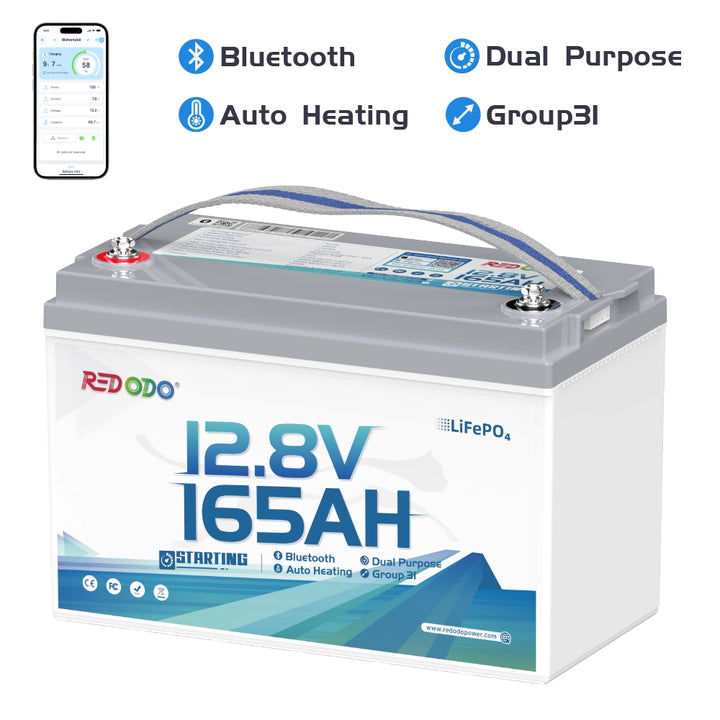
Best Starting Battery for 12V Bass Boat: Redodo 12V 165Ah Group 31 Dual-Purpose Battery
Dual-purpose batteries need to do more than simply crank the engine. They often support electronics, pumps, lighting, and additional accessories.
The Redodo 12V 165Ah Group 31 marine battery offers a Group 31 form factor while providing significantly lighter weight and higher usable energy compared to traditional lead-acid options. Bluetooth monitoring also allows anglers to check battery status directly from their phones.
This battery works well for boat owners seeking both starting capability and house battery functionality.
Best Trolling Motor Battery for 12V Bass Boat: Redodo 12V 100Ah Group 31 Bluetooth Battery
Anglers using smaller trolling motors or compact bass boats often prioritize both runtime and weight savings.
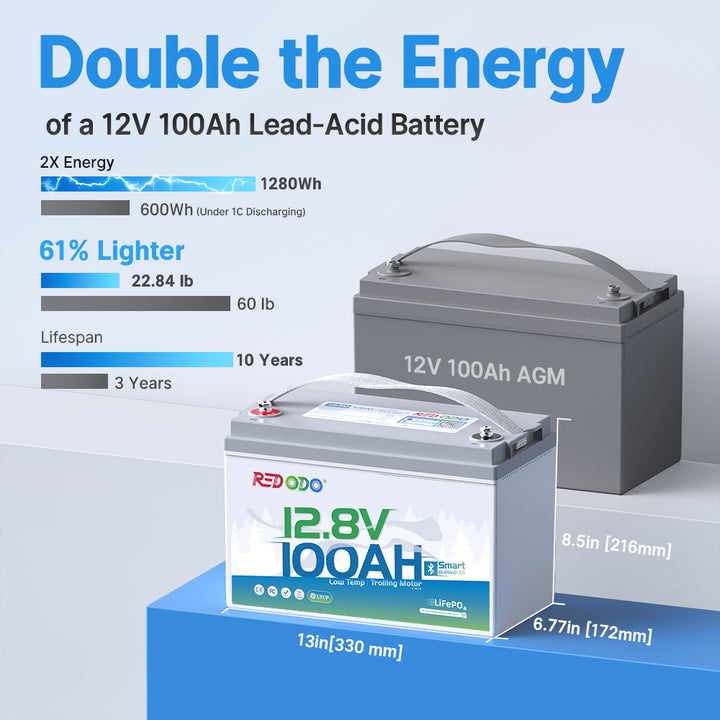
The 12V 100Ah Group 31 Bluetooth battery delivers deep cycle performance while maintaining a compact footprint. It saves 61% weight while providing two times usable capacity than the same Group 31 lead-acid alternatives.
Best Trolling Motor Battery for 24V Bass Boat: Redodo 24V 50Ah Bluetooth Battery
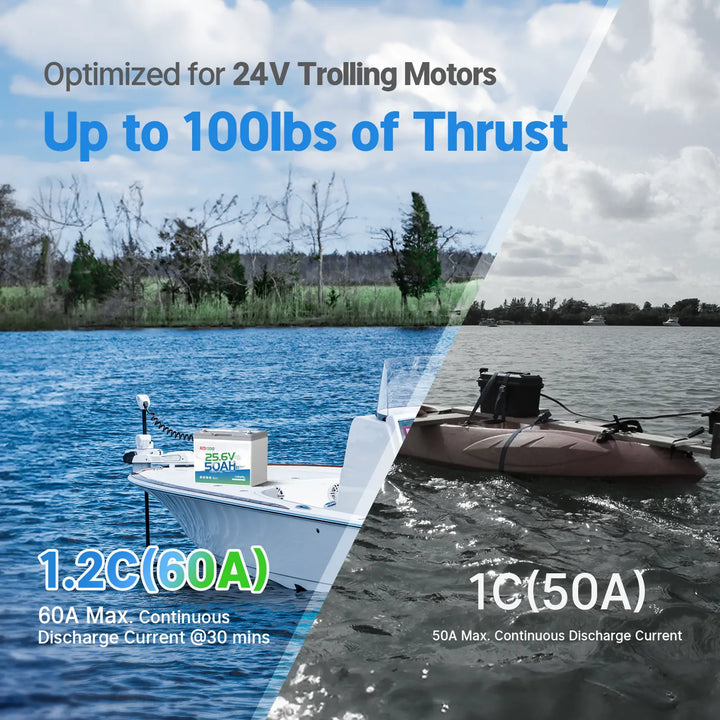
Many bass boats equipped with mid-size trolling motors operate on 24V systems. Insteading of using two 12V batteries connected in series is common, the Redodo 24V 50Ah Trolling Motor Battery provides a streamlined alternative.
It reduces wiring complexity, saves valuable compartment space, and simplifies installation and charging. Built-in Bluetooth monitoring also allows anglers to monitor battery performance, capacity, and remaining power directly from their smartphones.
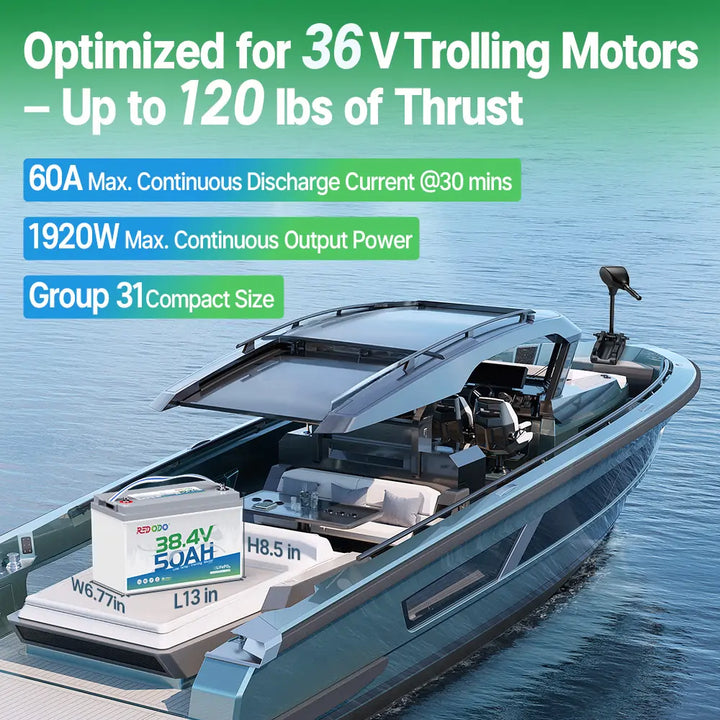
Best Trolling Motor Battery for 36V Bass Boat: Redodo 36V 50Ah Lithium Battery
For larger bass boats running high-thrust trolling motors, 36V systems have become increasingly popular due to their improved efficiency, stronger thrust, and longer runtime.
Instead of connecting three separate 12V batteries in series, the Redodo 36V 50Ah Trolling Motor Battery offers a cleaner, more compact solution. Ideal for tournament anglers or bass boat owners seeking a simpler high-performance setup.
Best Battery for Bass Boat Electronics: Redodo 12V 50Ah Bluetooth Battery
Modern bass boats may run multiple fish finders, GPS systems, forward sonar units, and networking equipment simultaneously.
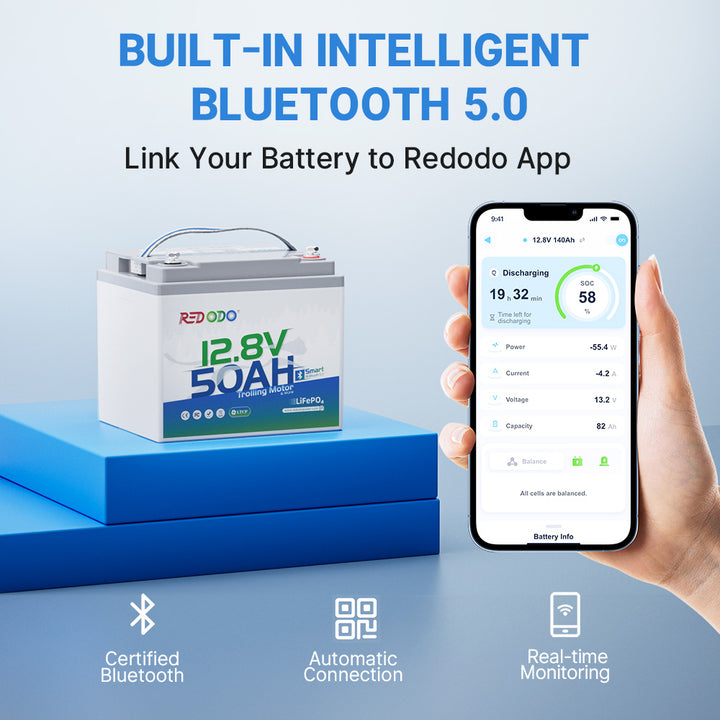
A dedicated electronics battery can isolate sensitive equipment from trolling motor loads and improve reliability. The 12V 50Ah LiFePO4 Bluetooth battery provides lightweight power for electronics while occupying minimal space inside crowded compartments.
For anglers running advanced electronics packages, dedicated power can help reduce interference and improve system stability. The Bluetooth monitoring makes power management more convenient and efficient.
FAQs about Battery for Bass Boats
What is the best lithium battery for bass boat use?
The best lithium battery depends on the intended application. Starting systems, trolling motors, and electronics all have different requirements. Many anglers combine multiple battery types to optimize performance.
Can I replace AGM batteries with lithium batteries for bass boat directly?
In many cases yes, but you should verify charger compatibility, voltage requirements, and charging system specifications before upgrading.
Is lithium batteries worth it for bass boats?
For anglers who value longer runtime, lighter weight, faster charging, and reduced maintenance, lithium batteries often provide significant long-term advantages despite higher upfront cost.
Conclusion
Choosing the best batteries for bass boats requires understanding how you actually use your boat. Voltage requirements, runtime expectations, available space, and equipment loads all influence the ideal battery setup.
Whether you need a compact battery for electronics, or a powerful 24V or 36V trolling motor setup, lithium batteries offer clear advantages on weight, power delivery, and lifespan.
By upgrading to lithium and matching your battery system to how and where you fish, you can spend less time worrying about power management and more time focusing on what matters most—catching fish.
Read More:
6 Best Lightweight Trolling Motor Batteries in 2026

Redodo
Redodo
Join Redodo
Related Post

What is SOC in Lithium Battery and Why Does It Matter?

Best Portable Battery for Overlanding 2026: Buyer’s Guide

How to Live in an RV Full-Time: A Complete Beginner’s Guide

How To Test a Battery with a Multimeter? (Step-by-Step)

5 Best 48V Lithium Batteries for Golf Cart in 2026
Related Products

⚡【Falsh Sale】Redodo 12V 165Ah 1200 CCA Group 31 Dual-Purpose Lithium Marine Battery | Starting • Trolling • Electronics— All from One

⚡【Falsh Sale】Redodo 24V 50Ah Bluetooth Lithium Trolling Motor Battery | For 24V Trolling Motors with up to 100 lbs

⚡【Falsh Sale】Redodo 36V 50Ah Lithium Trolling Motor Battery for 36V Trolling Motors with 100-120 lbs


⚡【SAVE $35】Redodo 12V 100Ah 900 CCA Group 27 Dual Purpose Marine Battery with OTA Bluetooth Auto-Heating

⚡【Flash Sale】Redodo 12V 100Ah Group 24 Bluetooth LiFePO4 Battery | Real-Time Battery Monitoring | For RV, Marine, Solar

Redodo 12V 100Ah Group 31 Bluetooth Lithium Battery | Real-Time Battery Monitoring | For RV, Marine, Solar

⚡【Flash Sale】Redodo 12V 100Ah Lithium Trolling Motor Battery With Low Temp Protection