What Are Street Legal Requirements for Golf Carts?
In the United States, golf carts are no longer limited to golf courses. They are widely used in suburban neighborhoods, retirement communities, and resort towns for short-distance travel and daily convenience. However, a standard factory golf cart is not automatically allowed on public roads.
Understanding the street legal golf cart requirements is essential for anyone planning to use a golf cart beyond private property. This guide explains the full requirements for street legal golf cart use, helping owners stay compliant and drive with peace of mind.
Golf Cart Classification and Speed Regulations
Golf carts are generally divided into two categories in the U.S.: standard golf carts and Low-Speed Vehicles (LSVs).
Standard Golf Carts
Most factory golf carts have a top speed of 15–20 mph. They are designed strictly for controlled environments such as golf courses, private estates, and gated communities.
These vehicles are not equipped with full road safety systems and are generally prohibited from public roads, including city streets and highways.
Low-Speed Vehicles (LSVs)
To legally operate on public roads, a golf cart must be converted into an LSV according to federal standards. Key requirements include:
- Maximum speed: 25 mph
- Vehicle weight: Under 3,000 lbs
- Safety standards: Must comply with Federal Motor Vehicle Safety Standards (FMVSS)
This classification is the key legal boundary between recreational carts and road-legal vehicles.
| Vehicle Type | Maximum Speed Limit | Common Use Case & Legal Requirements |
|---|---|---|
| Standard Golf Cart | 12–19 mph (approx. 19–30 km/h) |
Designed specifically for golf courses or gated communities. Generally, they cannot be driven legally on public streets. |
| Low-Speed Vehicle / Neighborhood Electric Vehicle (LSV / NEV) | 20–25 mph (approx. 32–40 km/h) |
Street-legal golf carts governed by federal regulations under FMVSS 500. To be registered and plated, they must be equipped with headlights, seat belts, rearview mirrors, a windshield, and a VIN. |
Even LSVs that meet compliance standards are restricted to roads with posted speed limits of 25–35 mph or lower. They are strictly prohibited from highways, expressways, and major arterial roads. In many states, nighttime driving is also restricted unless the vehicle is equipped with a complete lighting system.

Safety Equipment for Street Legal Golf Carts
Whether you are driving a modified golf cart or a compliant LSV, having the required safety equipment is a fundamental condition for legal operation on public roads.
Lighting and Reflective Devices
A street-legal golf cart must be equipped with a complete lighting system, including headlights, tail lights, brake lights, and front and rear turn signals. Reflective markers or reflectors should also be installed on the front, rear, and sides of the vehicle to improve visibility in low-light conditions.
These features help other drivers and pedestrians recognize the vehicle more easily, reducing the risk of accidents during nighttime or poor-weather driving.
Windshield, Mirrors, and Braking System
To improve driver visibility and vehicle safety, most states require a safety-glass windshield along with left and right side mirrors. The golf cart must also have a fully functional braking system that includes both a service brake and an independent parking brake.
Seat Belts and Passenger Protection
Every designated seating position in a street-legal golf cart must be equipped with an approved seat belt. For low-speed vehicles, federal safety regulations generally require both the driver and all passengers to wear seat belts whenever the vehicle is operated on public roads.
Vehicle Identification and Compliance Markings
To comply with federal and state regulations, a street-legal golf cart must display the appropriate low-speed vehicle or slow-moving vehicle identification where required. The vehicle must also have a valid Vehicle Identification Number (VIN) and complete registration records verifying that it has been properly inspected and approved for road use.
Registration, Insurance, and Driver Requirements
In addition to meeting hardware standards, owners must comply with state registration procedures, insurance requirements, and driver qualification rules before operating a golf cart on public roads. Although specific regulations vary by state, the overall legal framework is broadly similar across the United States.
Vehicle Registration
Once a golf cart has been converted into a compliant low-speed vehicle, it typically must be registered with the local Department of Motor Vehicles (DMV) or the state’s equivalent licensing agency. After inspection and approval, the vehicle may receive a license plate or registration permit authorizing public-road use.
In some communities, golf carts used only for local neighborhood transportation may qualify for a limited-use permit instead of full vehicle registration.
Insurance Requirements
Liability insurance is mandatory in most states for street-legal golf carts. States with large numbers of golf cart users, such as Florida and Texas, generally prohibit uninsured LSVs from operating on public roads.
Driver Eligibility
Driver qualification requirements vary by state, but most jurisdictions require operators of street-legal golf carts or LSVs to hold a valid driver’s license. The minimum driving age is commonly between 14 and 16 years old, depending on local law.
Some states also provide limited exemptions that allow unlicensed drivers to operate standard golf carts within designated communities or near a golf course, provided specific conditions are met.
Upgrade Your Golf Cart Power for Better Street Performance
Once your golf cart has been properly converted and registered for street use, upgrading to a reliable power system can significantly improve both performance and driving comfort.
Redodo lithium golf cart batteries are designed to replace traditional lead-acid batteries with minimal hassle and are compatible with most 48V golf carts and Low-Speed Vehicles on the market. Compared with conventional lead-acid batteries, Redodo 48V lithium batteries are lighter, offer higher energy density, and provide a longer driving range on a single charge. They are suitable for neighborhood transportation, golf course travel, campground use, and other short-distance trips.
Built to deliver consistent performance, Redodo golf cart lithium batteries support up to 200A continuous discharge, providing smooth acceleration and dependable power under demanding conditions. They also feature strong high- and low-temperature performance, low self-discharge, an extended lifespan, and minimal maintenance requirements.
Whether you are commuting through your community or spending a day on the course, Redodo batteries provide reliable, long-lasting power for every ride.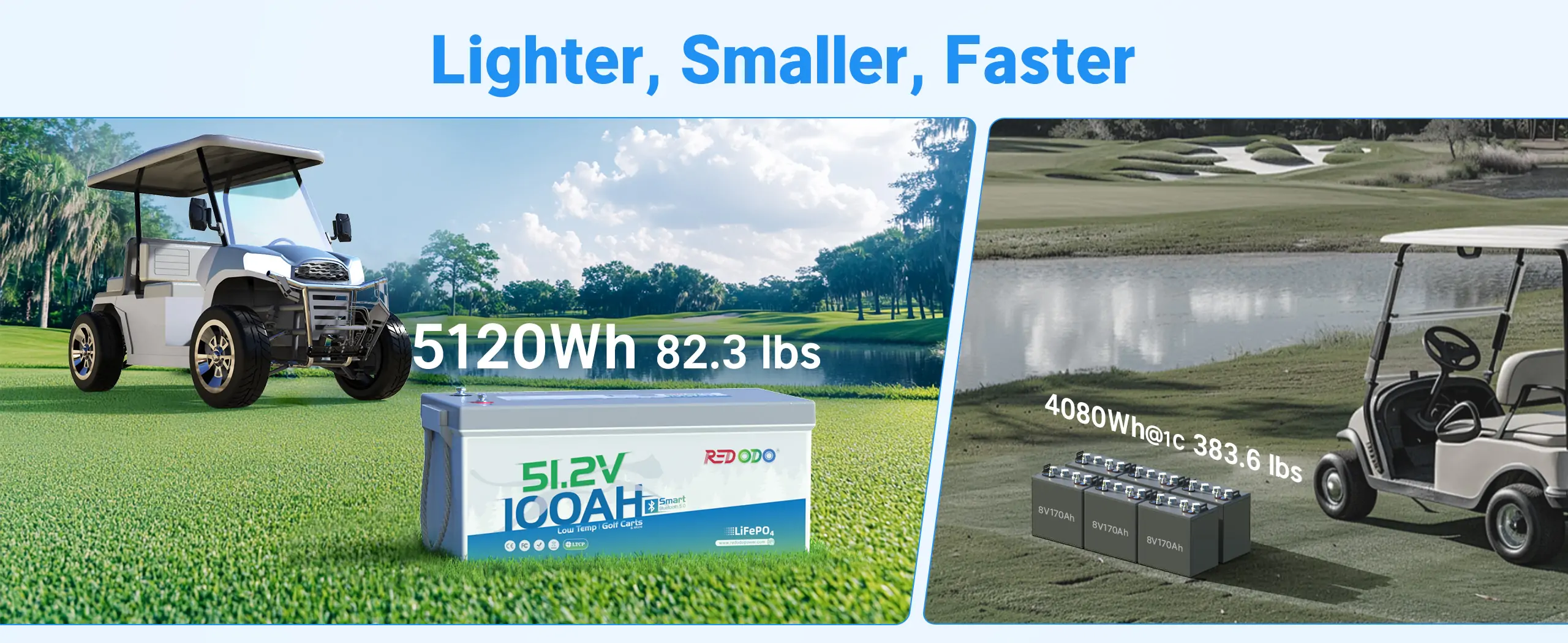
FAQs About Street Legal Golf Carts
Can a Stock Golf Cart Without Modifications Be Driven on Public Roads?
No. Standard golf carts are not equipped with the required safety features or speed capabilities. They are generally permitted only on private property, golf courses, or within designated communities.
Do Street Legal Golf Cart Requirements Vary by State?
Yes, but mainly in the details. Federal law establishes core standards for speed and safety equipment, while states such as California, Florida, and Texas may have different registration procedures, insurance requirements, and permitted road zones. Always verify the applicable state and local regulations before using your cart on a public road.
Can a Street-Legal Golf Cart Be Driven at Night?
Only if it is fully equipped with the required lighting systems, including headlights, tail lights, brake lights, and turn signals. Otherwise, many states and local jurisdictions restrict golf cart operation to daylight hours.
Conclusion
The key to legally operating a golf cart on public roads in the U.S. is straightforward: proper classification, safety compliance, and complete documentation.
Standard golf carts are generally limited to off-road or designated local environments, while broader road use typically requires a federally compliant Low-Speed Vehicle. This includes installing the required safety equipment, completing registration, obtaining applicable insurance, and meeting driver eligibility requirements.
Although regulations vary by state and municipality, the core street legal golf cart requirements are broadly consistent. Before driving on public roads, confirm the current rules with your state DMV and local authorities so you can operate safely and legally.
Read More
5 Best 48V Lithium Batteries for Golf Cart in 2026
What is the Best Battery for Yamaha Golf Carts?

Redodo Technical Team
Redodo Technical Team
Join Redodo
Related Post

What Are Street Legal Requirements for Golf Carts?

What is SOC in Lithium Battery and Why Does It Matter?

Best Portable Battery for Overlanding 2026: Buyer’s Guide

How to Live in an RV Full-Time: A Complete Beginner’s Guide

How To Test a Battery with a Multimeter? (Step-by-Step)
Related Products