The Ultimate Guide to RV Batteries: Types, Size, Upgrade & Maintenance
A dependable battery system is the foundation of every successful RV trip. Whether you're an RV beginner or living off-grid full-time, learning about RV power systems helps you choose the right battery, maximize energy efficiency, and ensure reliable power for your journey.
This complete guide breaks down everything you need to know about RV batteries, including types, sizing, upgrades, and maintenance, so you can build a reliable power system that fits your travel style.
Table of Content
- Part 1. Understanding RV Power System
- Part 2. Types of RV Batteries: Lead-Acid vs. Lithium
- Part 3. Deep Cycle RV Battery vs. Marine Battery
- Part 4. RV Battery Voltage: 6V, 12V, and 24V
- Part 5. RV Battery Size & Capacity
- Part 6. Upgrade RV Batteries
- Part 7. Best RV Battery Setups for 2026
- Part 8. RV Battery Charging & Life
- Part 9. RV Battery Maintenance
- Conclusion: Power Your RV with Confidence
Part 1. Understanding RV Power System
How RV Battery Systems Work?
Before delving into the details of RV battery power, it’s important to understand its role within your RV’s electrical system.
Your battery acts as an energy storage unit, supplying power when you're not connected to shore power. It works alongside several key components:
- Converter/Charger – Charges your battery when plugged into shore power
- Alternator – Charges the battery while driving
- Solar Panels with Charge Controller (Optional) – Provide renewable charging when off-grid
- Inverter (Optional) – Converts DC battery power into AC for household appliances
A well-balanced system ensures your battery capacity matches your energy consumption and charging sources. Without this balance, even a large battery can underperform.
RV Camping Power Solutions
RV camping power solutions include traditional shore power and fuel generators, as well as solar systems and portable power stations, providing reliable energy for both off-grid boondocking and stays at established campgrounds.
When it comes to powering your RV, there are several common options.
- Shore Power: The most convenient and reliable when staying at campgrounds, providing a stable electricity source. However, it restricts you to hookup sites and can be hard to book during peak seasons, limiting travel flexibility.
- Generators: Offer strong backup power and can handle high loads, but they tend to be noisy and require fuel, making them less environmentally friendly.
- Solar Power: A clean and renewable solution, ideal for off-grid camping, though it depends on sunlight conditions.
- Portable Power Stations: are compact and easy to use, making them suitable for light, short-term camping needs.
- Deep Cycle Batteries: Designed to deliver steady, long-duration power rather than short bursts, making them ideal for RV house loads such as lighting, appliances, and electronics.
For those seeking true energy independence, combining RV batteries with solar power is the most effective solution. This setup allows you to store energy efficiently and recharge continuously, giving you the freedom to stay off-grid longer without relying on shore power or generators.
Part 2. Types of RV Batteries: Lead-Acid vs. Lithium
Not all deep cycle batteries are built the same, and choosing the wrong type can lead to poor performance and frequent replacements.
The main types of RV batteries are lead-acid and lithium. In the past, lead-acid batteries were the standard choice for RVs due to their low initial cost and wide availability. However, they come with significant limitations, including heavy weight, limited usable capacity, and higher maintenance requirements.
As RV power demands have increased and energy efficiency has become more important, lithium (LiFePO4) batteries have gradually replaced lead-acid as the preferred solution for modern RV systems.
- Lead-Acid Batteries (FLA, AGM, Gel): Lower upfront cost but heavier, shorter lifespan, and require maintenance
- Lithium (LiFePO4) Batteries: Higher upfront cost but significantly longer lifespan, lighter weight, and better efficiency
👉 Related Reading: AGM vs. Lithium Batteries for RV And Marine
Part 3. Deep Cycle RV Battery vs. Marine Battery
While both deep cycle RV batteries and marine batteries are designed to provide sustained power over time, they are optimized for different use cases.
Deep cycle RV batteries are primarily built to support long-duration household loads such as lighting, refrigeration, fans, and appliances in an RV. They are designed for consistent energy delivery and frequent deep discharge cycles, making them ideal for off-grid living and extended travel.
On the other hand, marine deep cycle batteries may include dual-purpose marine batteries and marine house (or “household”) batteries, as both are capable of deep-cycle discharge.
In addition, to withstand harsh marine environments, some marine deep cycle batteries are specially engineered with enhancements such as higher waterproof ratings and stronger vibration resistance to ensure safe and reliable operation.
👉 Related Reading: Difference Between Deep Cycle Marine and RV Battery
Part 4. RV Battery Voltage: 6V, 12V, and 24V
RV batteries commonly come in 6V, 12V, and 24V configurations, each suited for different power needs and system designs.
- 6V RV Batteries: Typically used in pairs connected in series to create a 12V system. They are often deep cycle golf cart-style batteries known for their durability and strong performance in high-capacity setups. This setup is a good choice for users who need long runtime and are willing to manage multiple battery units.
- 12V RV Batteries: The most common choice for RVs because they are simple to install, widely compatible, and work well for small to medium power systems. They are ideal for weekend travelers or standard RV setups with moderate energy consumption.
- 24V RV Batteries: Generally used two 12V batteries connected in series for larger RVs or off-grid setups that require higher efficiency and lower current draw. By operating at a higher voltage, 24V systems reduce energy loss over long wiring distances and are better suited for high-demand appliances and expanded solar configurations.
👉 Related Reading: Two 6V vs. 12V Batteries for RV: Which is Better?
12V vs. 24V: Which RV Battery System is Better?
Part 5. RV Battery Size & Capacity
What Size Battery Do I need for RV?
Battery capacity is measured in amp-hours (Ah), which indicates how much energy a battery can store. Here’s a simplified guideline:
Step 1: Estimate Your Power Usage
Start by calculating your daily energy consumption. This gives you a baseline for how much capacity you need.
Step 2: Match Battery Capacity to Your Travel Style
| Usage Scenario | Power Usage Level | Recommended Battery Capacity | Recommended Redodo Battery |
|---|---|---|---|
| Weekend RV Users | Light usage | 100Ah-150Ah battery |
12V 100Ah Series 12V 140Ah |
| Boondocking (2–3 Days Off-Grid) | Moderate usage | 200Ah-300Ah battery |
12V 165Ah 12V 200Ah 12V 280Ah |
| Full-Time RV Living | High usage | 300Ah+ battery system |
12V 300Ah 12V 320Ah |
For a more comfortable off-grid experience, many RV users choose to size up their battery capacity beyond the minimum recommendation.
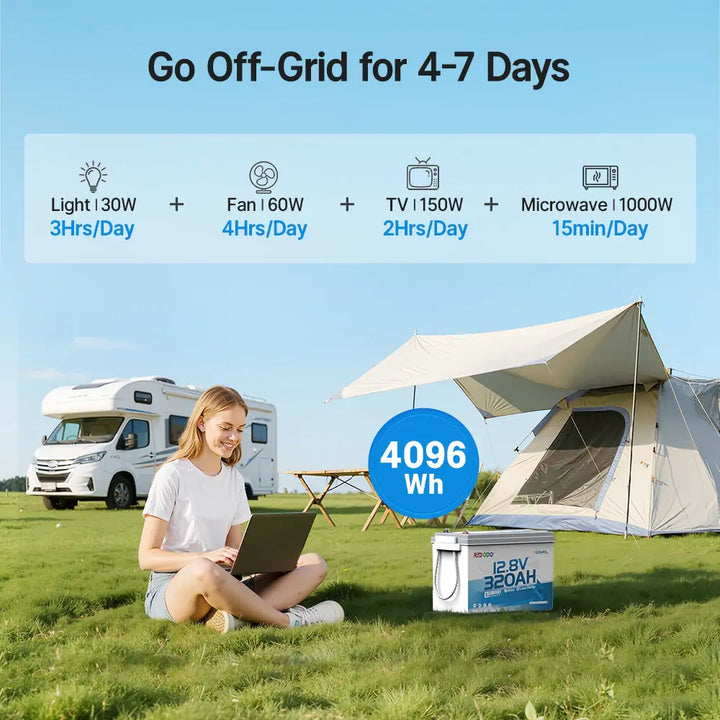
Redodo 12V 320Ah 4kWh Lithium Battery
Step 3: Consider Expandability
Choosing a battery system that allows expansion gives you flexibility as your power needs grow. This is especially important if you plan to add solar or upgrade your setup later.
When choosing the right RV battery size, it’s also important to consider the physical dimensions of the battery. Common sizes such as Group 24 and Group 31 vary in length, width, and height. Ensure the battery fits properly in your RV’s battery compartment.
👉 Related Reading: What Size Battery Do I Need for My Camper?
How Many Batteries Do I Need for RV?
The number of batteries you need depends on your power usage, travel style, and how long you plan to stay off-grid. For short trips with access to shore power, a single battery may be sufficient. However, for off-grid trips or longer journeys, you’ll need more batteries to ensure a consistent and reliable power supply throughout your trip.
If you plan to integrate solar panels into your RV system, you may be able to reduce the number of batteries required. Solar can recharge your batteries during the day, especially in areas with strong sunlight, helping extend your runtime and improve overall energy efficiency.
👉 Related Reading: How Many Batteries Do I Need in My RV?
Part 6. Upgrade RV Batteries
Why Lithium Batteries Are the Best Upgrade?
Lithium iron phosphate (LiFePO4) batteries have rapidly become the preferred choice for RV owners due to their superior performance and long-term value.
Compared to traditional batteries, they offer:
- Up to 4,000+ cycles (5–10x longer lifespan)
- Stable voltage output for consistent performance
- Up to 50% lighter weight
- Faster charging and deeper usable capacity
For RV users who want reliable power for off-grid trips or extended travel, lithium batteries are a practical upgrade.
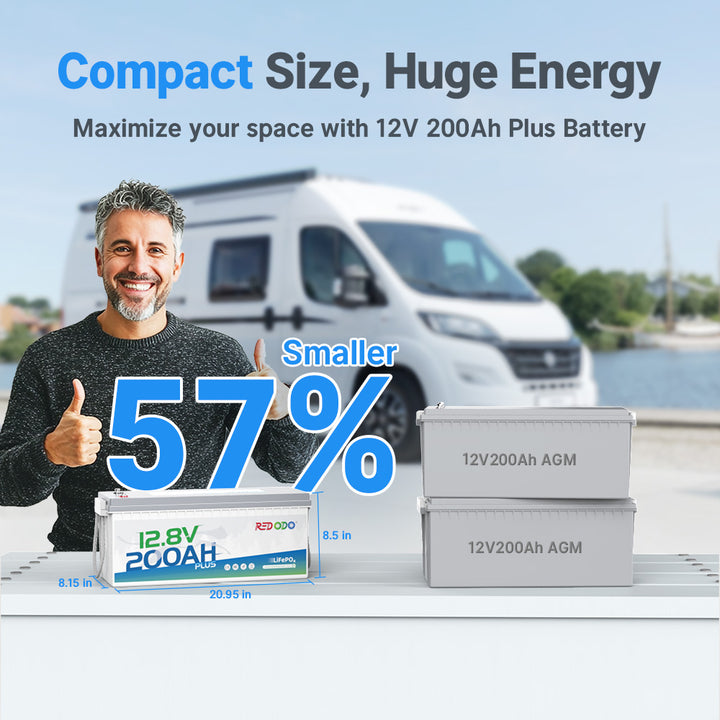
How to Upgrade Lead-Acid to Lithium Battery for RV?
In most RV setups, switching from lead-acid to lithium is straightforward and requires minimal modification, making lithium batteries a highly practical and worthwhile investment.
What to Check Before Upgrading?
- Charger compatibility (lithium-compatible required)
- Proper wiring and fuse protection
- Space and mounting considerations
Read this blog to learn the detailed steps for converting RV batteries to lithium.
Part 7. Best RV Battery Setups for 2026
Choosing the right RV battery setup depends on many factors. Different lifestyles require different levels of capacity, efficiency, and scalability.
Choose by Travel Style
For weekend RV users, the focus is on simplicity and convenience. A compact 100–150Ah lithium battery is usually enough to power lights, phone charging, and small appliances for short trips. These systems are lightweight, easy to install, and ideal for occasional camping without heavy power demand.
For boondocking or off-grid travel, energy independence becomes more important. A 200–300Ah battery bank is typically recommended to support essentials like refrigerators, water pumps, fans, and cooking devices.
For full-time RV living, a scalable lithium system (400Ah+) is the best solution. These setups support continuous use of high-demand appliances and provide stable, reliable power for extended off-grid living. Expandable systems also allow future upgrades as energy needs grow.
Choose by RV Type
For a travel trailer, power needs are generally moderate, making a 100–200Ah lithium system ideal. It provides enough energy for short trips and occasional boondocking while remaining cost-effective and space-efficient.
For a van or camper van, space and weight are critical considerations. A compact lithium setup around 100–200Ah is often preferred, offering efficient power for mobile lifestyles where every inch and pound matters.
For a motorhome, energy demand is significantly higher due to larger appliances and more onboard systems. A 300–600Ah lithium battery bank is typically recommended, especially for Class A or Class C motorhomes used for extended travel or full-time living.
👉 Related Reading: Top RV Battery Recommendations in 2026
Part 8. RV Battery Charging & Life
How to Charge an RV battery?
Charging an RV battery depends on the power sources available and the type of battery system installed. The most common methods include:
- Shore power charging
- Solar charging
- Generator charging
- Alternator charging while driving
Among these options, you need pair with a compatible lithium battery charger, solar charge controller, or DC-DC charger.
Read the blog to learn more details about charging RV batteries.
How Long Do RV Batteries Last?
The lifespan of RV batteries varies significantly depending on battery type, usage habits, and maintenance. Traditional lead-acid batteries typically last 2-4 years. Their performance also declines faster under heavy cycling conditions.
In contrast, LiFePO4 lithium batteries can last 8–10 years or more, offering 3,000–5,000+ cycles with stable performance throughout their lifespan. They require little to no maintenance and maintain consistent voltage even under high loads, making them a long-term solution for RV users.
👉 Related Reading: How Long Do RV Batteries Last
Part 9. RV Battery Maintenance
Proper maintenance is essential for extending battery lifespan and ensuring your RV power system performs reliably on every trip. Even though modern lithium batteries require minimal upkeep, good usage habits still play a key role in maximizing efficiency and long-term durability.
Avoid Frequent Deep Discharge
Repeatedly draining lead-acid batteries to very low levels can significantly shorten their lifespan and reduce overall performance over time. Keeping the charge within a moderate range helps maintain healthier cycles and longer service life.
Store Batteries at Moderate Temperatures
Extreme heat or cold can negatively impact battery performance, reduce usable capacity, and accelerate degradation. Whenever possible, store your batteries in a dry environment with stable, moderate temperatures.
Regularly Check System Health
Monitor voltage levels, inspect cable connections for tightness and corrosion, and review overall system performance. Routine checks help detect early signs of issues and prevent unexpected power loss during RV trips.
👉 Related Reading: RV Battery Maintenance Checklist
Conclusion: Power Your RV with Confidence
Your RV battery is more than just a component; it’s the key to ensuring whether your adventure is perfect. Choosing the right type, size, and setup allows you to travel further, stay off-grid longer, and enjoy a more comfortable experience.
With modern lithium battery technology, RV owners now have access to more efficient, reliable, and scalable power solutions than ever before.

🚐 Ready to upgrade your RV battery system?
Explore high-performance lithium batteries designed for RV, camper, van, and off-grid adventures.
Learn More
Redodo
Redodo
Join Redodo
Related Post

Best Portable Battery for Overlanding 2026: Buyer’s Guide

How to Live in an RV Full-Time: A Complete Beginner’s Guide

How To Test a Battery with a Multimeter? (Step-by-Step)

5 Best 48V Lithium Batteries for Golf Cart in 2026

What Battery to Run a Fish Finder and Livewell All Day?
Related Products

Redodo 12V 100Ah Group 24 Bluetooth LiFePO4 Battery | Real-Time Battery Monitoring | For RV, Marine, Solar


Redodo 12V 300Ah Lithium LiFePO4 Battery | Replaces 6*12V 100Ah AGM Batteries | For RV, Marine, Home battery backup

🔥【Sale-Final $636】Redodo 12V 320Ah Mini Bluetooth Lithium Battery | Best for Boondocking, Long Road Trip, Desert Trip, Home Backup

Redodo 12V 100Ah LiFePO4 Lithium Battery | Best Budget | For RV, Solar, Trolling Motor

🔥【Sale-$244 After Subscribe】Redodo 12V 100Ah Group 31 Bluetooth Lithium Battery | Real-Time Battery Monitoring | For RV, Marine, Solar

🔥【Sale-$367 After Subscribe】Redodo 12V 165Ah Group 31 Bluetooth Lithium Battery | For RV, Marine, Solar Home