A Complete Spring Boating Checklist & Maintenance Tips
As winter fades and spring summer boating season begins, preparing your boat properly is essential for safety, performance, and long-term reliability. Whether you own a fishing boat, pontoon, sailboat, or offshore vessel, a well-structured spring boat checklist ensures your first trip of the season is smooth and worry-free.
Now it’s time to take advantage of the weekend to carry out your spring boating check! In this guide, we’ve outlined a complete boating checklist and maintenance tips to help you get back on the water with confidence after a full season of storage.
Spring Boating Checklist:
Why Spring Boat Preparation Matters
After months in storage, boats often develop hidden issues. Batteries lose charge, fuel degrades, seals dry out, and moisture can accumulate in critical areas. Without proper inspection, these small problems can quickly turn into costly repairs or dangerous situations on the water.
A thoughtful spring boat checklist helps you catch these issues early while ensuring every system—from engine performance to safety equipment—is fully operational. It also improves efficiency and extends the lifespan of your boat, making every trip more reliable and enjoyable.
Hull and Deck Inspection
Your boat preparation checklist should always begin with a thorough exterior inspection. The hull and deck are constantly exposed to harsh elements, and even minor damage can worsen over time if left unchecked.
Walk around the boat slowly and examine the hull for cracks, blisters, or scratches that may have developed during storage. Pay close attention to fittings, railings, and seals around hatches and windows, as these areas are prone to loosening or leaking.
If your boat was stored outdoors or shrink-wrapped, it’s especially important to check for trapped moisture or mildew.
Cleaning the hull early in the season not only improves appearance but also protects the surface. Applying a fresh coat of wax helps guard against UV exposure and corrosion, particularly in saltwater environments.

Engine and Mechanical Systems
The engine is the most critical component in your spring boating checklist, and it deserves careful attention before your first launch. Even if your boat was winterized properly, several components may require servicing.
Start by changing the engine oil and replacing filters to ensure optimal performance. Over time, oil can degrade and lose its protective properties.
Inspect belts and hoses for cracks or stiffness, as temperature fluctuations during winter can weaken these parts.
It’s also important to check coolant levels and examine the propeller for damage or debris, such as fishing line wrapped around the shaft.
Before heading out, run the engine briefly—either on land with proper cooling or at the dock—to confirm everything is functioning smoothly. This simple step can help you detect unusual noises, vibrations, or starting issues early.
Fuel System
Fuel systems are particularly vulnerable after long storage periods, making them a key focus in any boat preparation checklist. Gasoline can degrade within a few months, leading to reduced performance or engine trouble.
If fuel has been sitting in the tank since last season, inspect it carefully. Check fuel lines for cracks, brittleness, or leaks, and ensure vents are clear to allow proper airflow. Adding a fuel stabilizer can help maintain fuel quality moving forward.
Boat Battery and Electrical Systems
After months of inactivity, batteries are often one of the first components to fail. A reliable electrical system is essential not only for starting the engine but also for powering navigation and safety equipment.
Begin by fully charging your marine batteries and checking their voltage levels. Corrosion around terminals is common and should be cleaned to ensure proper conductivity. Tighten all connections and inspect wiring for signs of wear or damage.
Testing onboard electronics, including livescope, navigation lights, bilge pumps, and control panels. If your boat uses multiple batteries, confirm that they are balanced and functioning together properly to avoid uneven discharge or charging issues.
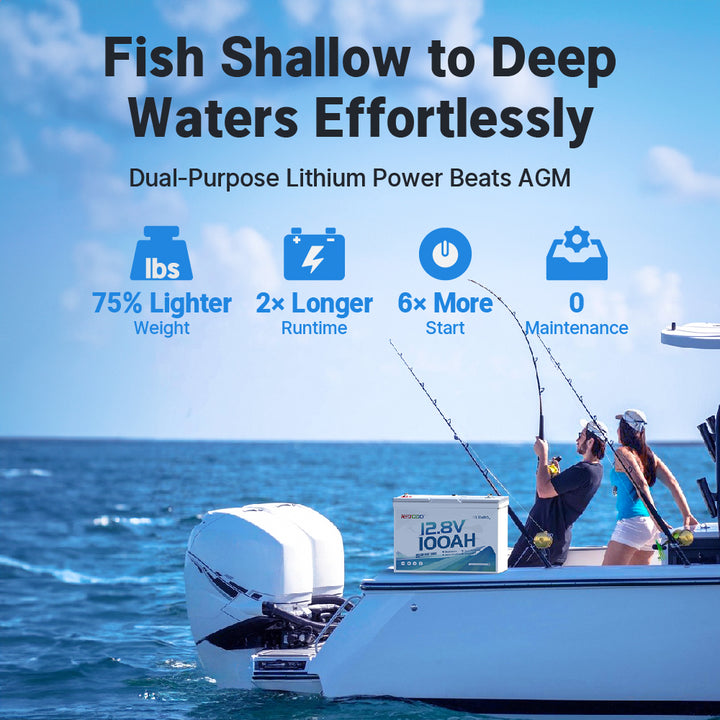
Redodo 12V 100Ah Group 27 Dual-Purpose Marine Battery
Safety Equipment Inspection
Regulations in the United States require certain equipment onboard, but beyond compliance, these items are critical for protecting everyone on the water.
Take time to inspect life jackets and ensure there are enough for all passengers. Check fire extinguishers to confirm they are fully charged and within their expiration date. Emergency signaling devices, such as flares or horns, should also be tested or replaced if necessary.
A well-stocked first aid kit is another essential item that is often overlooked. Ensuring everything is accessible and in good condition gives you peace of mind before every trip.
Plumbing and Interior Systems
For boats equipped with freshwater systems, sinks, or marine toilets, the preparation should include a careful inspection of plumbing components. Water left in the system during winter can lead to mold, odors, or even damage to hoses and fittings.
Flushing and sanitizing the freshwater tank helps remove bacteria and ensures clean water for use. At the same time, check for leaks or loose connections throughout the system.
Trailer Inspection
If you transport your boat using a trailer, this step is just as important as inspecting the boat itself.
Check tire pressure and look for signs of wear or cracking. Wheel bearings should be inspected and lubricated if necessary, especially if the trailer has been sitting for months.
Lights and wiring should be tested to ensure visibility and compliance with road regulations.
Important: Inspect Your Marine Battery for Peak Performance
Your marine battery plays a critical role in ensuring a smooth and reliable boating experience, making it an essential part of your spring boat checklist. After months of winter storage, battery performance can decline, and neglecting it may lead to starting issues or power failures on the water.
For marine lead-acid batteries, a regular maintenance is essential.
- Check the electrolyte levels and topping them off with distilled water if needed
- Look for any cracks, leaks, or bulging in the battery case
- Clean off corrosion from the terminals to ensure a solid connection
Since lead-acid batteries tend to lose charge over time, it’s also important to fully recharge the battery and confirm it can still hold a steady voltage.
For those running lithium batteries, the process is much simpler, but not entirely hands-off. While lithium batteries require far less maintenance, you should still:
- Check that the voltage is within a healthy range
- Ensure the battery terminals are clean and tightly connected
- Confirm the charge level is sitting around 50% if it has been in storage
Before heading out on your boating adventure, test your batteries to ensure them operate properly and power your equipment reliably. If you notice signs of declining performance, such as slow engine cranking, reduced runtime, or difficulty holding a charge, it may be time to consider a replacement.
Upgrading to a high-quality lithium marine battery can provide longer lifespan, lighter weight, and more reliable power. Redodo’s lithium marine batteries offer a full range of high-performance solutions, including:
- Trolling motor batteries
- Lithium marine starting batteries
- Dual-purpose marine batteries
- Fish finder batteries
These batteries designed to meet the diverse needs of boat owners and deliver dependable power for every water adventure.

Essential Spring Boat Maintenance Tips
Beyond the checklist, here are practical spring boat maintenance tips to keep your vessel running at peak performance all season.
Start Engines Early
Run your engine on land or at dock before your first trip to detect issues early.
Replace Consumables Proactively
Don’t wait for parts to fail—replace oil, filters, and worn belts as preventive maintenance.
Protect Against Corrosion
Use marine-grade lubricants on metal parts, especially in saltwater environments.
Keep Batteries Fully Charged
Use a proper battery charger to fully charge your onboard batteries after storage and between trips. If your battery fails to charge, check whether it is damaged or consider a lithium marine battery replacement.
Schedule Professional Service
If your boat has complex systems or hasn’t been used in a long time, a professional inspection can prevent costly breakdowns.
Conclusion
Getting your boat ready for spring doesn’t have to be complicated, but it does require attention to detail. A detailed spring boating overhaul ensures that every system is ready for the season ahead.
By following this complete spring boat preparation checklist and maintenance tips, you can enjoy a safer, smoother, and more reliable boating experience all season long.
Read More:
What Is the Best Marine Battery: Type, Size, and Buying Guide
Spring Bass Fishing: Tips, Gear & Power Setup for Your Boat
The Complete Guide to Power Your Spring Camping & Fishing Trips

Redodo
Redodo
Join Redodo
Related Post

Best Portable Battery for Overlanding 2026: Buyer’s Guide

How to Live in an RV Full-Time: A Complete Beginner’s Guide

How To Test a Battery with a Multimeter? (Step-by-Step)

5 Best 48V Lithium Batteries for Golf Cart in 2026

What Battery to Run a Fish Finder and Livewell All Day?
Related Products

🔥【Sale-$334 After Subscribe】Redodo 12V 100Ah 900 CCA Group 27 Dual Purpose Marine Battery with OTA Bluetooth Auto-Heating

🔥【Sale-$437 After Subscribe】Redodo 12V 165Ah 1200 CCA Group 31 Dual-Purpose Lithium Marine Battery | Starting • Trolling • Electronics— All from One

Redodo 12V 300Ah Lithium LiFePO4 Battery | Replaces 6*12V 100Ah AGM Batteries | For RV, Marine, Home battery backup

🔥【Sale-$367 After Subscribe】Redodo 12V 165Ah Group 31 Bluetooth Lithium Battery | For RV, Marine, Solar Home

Redodo 12V 100Ah Group 24 Bluetooth LiFePO4 Battery | Real-Time Battery Monitoring | For RV, Marine, Solar


🔥【Sale-$244 After Subscribe】Redodo 12V 100Ah Group 31 Bluetooth Lithium Battery | Real-Time Battery Monitoring | For RV, Marine, Solar