Why Boat Batteries Won’t Charge? 6 Common Reasons and Solutions
After months of winter storage, many boat owners face the same frustrating issue: boat batteries not charging when the new fishing season begins. Whether you're preparing for your first spring outing or troubleshooting unexpected power failures, understanding why your boat battery is dead after winter is essential.
In this guide, we’ll break down the most common causes, how to diagnose the problem, and practical steps for activating boat battery charging.
Table of Content
6 Common Reasons That Cause Boat Batteries Not Charging
When you find your boat batteries not charging, especially after a long winter layup, the issue is usually tied to a few common root causes. Understanding these problems and knowing how to fix them can help you quickly restore power and avoid unnecessary battery replacement.
1. Over Discharge (Deep Discharge During Storage)
One of the most common reasons for boat batteries not charging after winter is over discharge. During months of inactivity, batteries naturally lose charge, and without maintenance charging, they can drop to critically low voltage levels. This often leads to a boat battery dead after winter, where the battery cannot accept a normal charge.
Solution:
Use a smart charger with a recovery or “activate” mode designed for deeply discharged batteries. Apply a slow, low-current charge over 24–48 hours to gradually restore voltage. If the battery does not respond, it may have suffered permanent damage and require replacement.
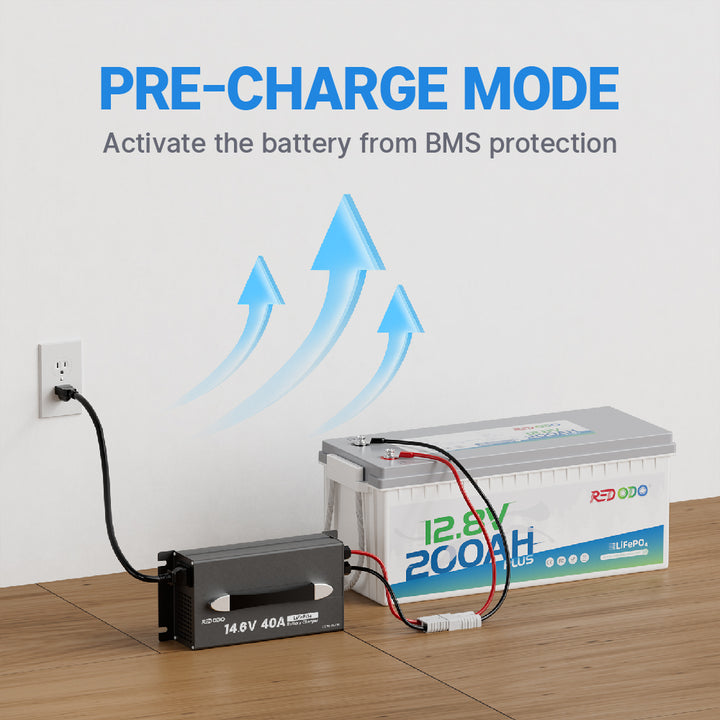
Redodo LiFePO4 Battery Charger with Activate Function
2. Sulfation (Lead-Acid Batteries)
Sulfation occurs when a lead-acid battery remains in a discharged state for too long. Sulfate crystals build up and harden on the battery plates, reducing its ability to accept and hold a charge. This is a key reason behind boat batteries not charging after extended storage.
Solution:
Use a charger with a desulfation or repair mode to help break down sulfate buildup. This may partially restore battery capacity. However, if sulfation is severe, replacing the battery is usually the most reliable option.
3. Cold Weather or Freezing Damage
If a battery is not fully charged before winter and not stored at indoor, it becomes more vulnerable to freezing temperatures. Frozen electrolyte can cause internal cracking and irreversible damage, making boat batteries after winter ineffective.
Solution:
Inspect the battery for signs of swelling, cracking, or leakage. Do not attempt to charge a frozen or damaged battery, and in the future, store batteries fully charged (lithium for 50%) in a temperature-controlled environment.
Related Reading: Do Lithium Batteries Freeze in Cold Weather?
4. Corroded or Loose Connections
Corrosion on battery terminals or loose wiring can block electrical flow, making it seem like the battery is not charging. This is especially common in marine environments with high humidity and salt exposure.
Solution:
Clean the terminals using a baking soda and water solution, remove corrosion, and tighten all connections securely. Applying a protective coating can help prevent future corrosion.
5. Faulty Charger or Charging System
Sometimes the issue is not the battery but the charging system. A malfunctioning onboard charger, damaged cables, or a faulty alternator can prevent proper charging, leading to confusion about whether the battery is defective.
Solution:
Test the charger with another battery or use a multimeter to verify output voltage. Inspect wiring and connections for damage. Repair or replace faulty charging components as needed.
6. Parasitic Drain During Storage
Even when your boat is turned off, certain devices like bilge pumps, alarms, or GPS systems may continue drawing small amounts of power. Over time, this can fully drain the battery, resulting in boat batteries not charging after winter.
Solution:
Disconnect the battery during storage or install a battery switch. Alternatively, use a breaker to keep the battery disconnect throughout the off-season.
In addition, you may encounter other boat battery charging issues, such as the battery only charging for a few minutes or charging very slowly. Here is a simple diagnostic checklist for your reference:
| Symptom | Possible Cause | What to Check |
|---|---|---|
| No response when charging | Deep discharge or dead battery | Measure voltage (below 10.5V = critical) |
| Charger turns on but stops quickly | Sulfation or internal damage | Try desulfation mode (if available) |
| Battery charges slowly | Corrosion or poor connections | Inspect and clean terminals |
| Charger not working | Charger failure | Test with another battery |
Be sure to wear insulated gloves during the process and follow proper safety precautions. If the issue persists after these checks, consider replacing the battery or consulting a professional technician.
Consider Upgrading Lead-Acid to Lithium Marine Batteries
Frequently dealing with boat batteries not charging? Upgrading to lithium (LiFePO4) batteries can be a smart and long-term solution.
Lithium marine batteries have lower self-discharge rates, better resistance to cold, and longer lifespans than lead-acid. They are far less likely to become unusable after winter storage, making them ideal for seasonal boaters.
| Feature | Lead-Acid Battery | Lithium (LiFePO4) Battery |
|---|---|---|
| Self-discharge rate | High | Very low |
| Cold resistance | Poor when discharged | Better performance |
| Maintenance | Requires regular charging | Minimal maintenance |
| Lifespan | 3–5 years | 8–10 years |
| Depth of discharge | ~50% usable | Up to 100% usable |
Benefits of Upgrading to Lithium Batteries for Boats
Lighter Weight
One of the biggest advantages of LiFePO4 lithium batteries is their significantly lighter weight. Compared to traditional lead-acid batteries, lithium options can be 50% lighter or more. This weight reduction improves boat speed, fuel efficiency, and handling, while also making installation and transport much easier—especially for smaller vessels or trolling motor setups.
Higher Usable Capacity
Lithium batteries provide much more usable energy. While lead-acid batteries typically allow only about 50% depth of discharge to avoid damage, lithium batteries can safely use up to 80–100% of their capacity. This means more runtime and fewer batteries needed for the same power demand.
Stable Voltage Output
Unlike lead-acid batteries, which experience voltage drop as they discharge, lithium batteries maintain a stable voltage throughout most of their cycle. This ensures consistent performance for onboard electronics, fish finders, trolling motors, and other critical systems.
Faster Charging
Lithium batteries charge significantly faster than lead-acid batteries and have higher charging efficiency. This is especially useful when relying on limited charging sources such as solar panels, onboard alternators, or short dockside charging periods.
Longer Lifespan
Lithium batteries typically last much longer than lead-acid batteries. With 4,000+ charge cycles compared to 300–500 cycles for lead-acid, they reduce the need for frequent replacements and offer better long-term value.
BCI Group Size Compatibility
Most lithium marine batteries are designed to match standard BCI Group sizes (such as Group 24, 27, and 31). This makes them easy drop-in replacements for existing lead-acid batteries, allowing upgrades without modifying battery trays or compartments.
.webp)
Redodo 12V 165Ah Group 31 Dual-Purpose Marine Battery
Lower Maintenance
Lithium batteries require little to no maintenance. They don’t need watering, equalization, or regular upkeep, and they are not affected by sulfation. This makes them more reliable, especially after long storage periods like winter layups.
FAQs about Boat Battery Not Charging
Why is my boat battery not charging even with a charger connected?
This usually indicates deep discharge, sulfation, or poor connections. It could also be a faulty charger. Checking voltage and inspecting terminals can help identify the issue.
Can a completely dead boat battery be recharged?
In some cases, yes. Slow charging or desulfation may revive it. However, if the battery has been deeply discharged for too long or damaged by freezing, it may not recover.
How long should I charge a boat battery after winter?
It depends on the battery size and condition. Deeply discharged batteries may require 12 hours or more of slow charging to recover safely.
Is it better to replace or repair a boat battery after winter?
If the battery cannot hold a charge or shows signs of physical damage, replacement is the better option. Repairs are only effective for minor issues like sulfation or connection problems.
How can I avoid boat batteries not charging after winter in the future?
Maintain a regular charging schedule during storage, disconnect all loads, and store the battery in a controlled environment. Using a battery maintainer can also help prevent deep discharge.
Conclusion
Dealing with boat batteries not charging can be frustrating, but most issues are preventable with proper care and storage. From self-discharge to corroded terminals and faulty chargers, understanding the root cause is key to finding the right solution.
If your battery is beyond recovery, upgrading to a more reliable option like Redodo lithium batteries can save you time, money, and hassle in the long run. If you’re unsure about your battery condition or need help choosing the right replacement, feel free to reach out or ask with your manufacturer for help.
Read More:
How To Fix a RV/ Marine Lithium-ion Battery that Won’t Charge?
Why RV Battery Dead After Storage and How to Fix?
What Is the Best Marine Battery: Type, Size, and Buying Guide

Redodo
Redodo
Join Redodo
Related Post

What is SOC in Lithium Battery and Why Does It Matter?

Best Portable Battery for Overlanding 2026: Buyer’s Guide

How to Live in an RV Full-Time: A Complete Beginner’s Guide

How To Test a Battery with a Multimeter? (Step-by-Step)

5 Best 48V Lithium Batteries for Golf Cart in 2026
Related Products


⚡【Flash Sale】Redodo 12V 100Ah Lithium Trolling Motor Battery With Low Temp Protection

⚡【Falsh Sale】Redodo 12V 165Ah 1200 CCA Group 31 Dual-Purpose Lithium Marine Battery | Starting • Trolling • Electronics— All from One

⚡【SAVE $35】Redodo 12V 100Ah 900 CCA Group 27 Dual Purpose Marine Battery with OTA Bluetooth Auto-Heating

⚡【Flash Sale】Redodo 12V 100Ah Group 24 Bluetooth LiFePO4 Battery | Real-Time Battery Monitoring | For RV, Marine, Solar

Redodo 12V 100Ah Self-Heating Lithium Battery | For RV, Boats, and Solar Home Systems

⚡【Falsh Sale】Redodo 24V 50Ah Bluetooth Lithium Trolling Motor Battery | For 24V Trolling Motors with up to 100 lbs

⚡【Falsh Sale】Redodo 36V 50Ah Lithium Trolling Motor Battery for 36V Trolling Motors with 100-120 lbs